🔹 Opening Paragraph
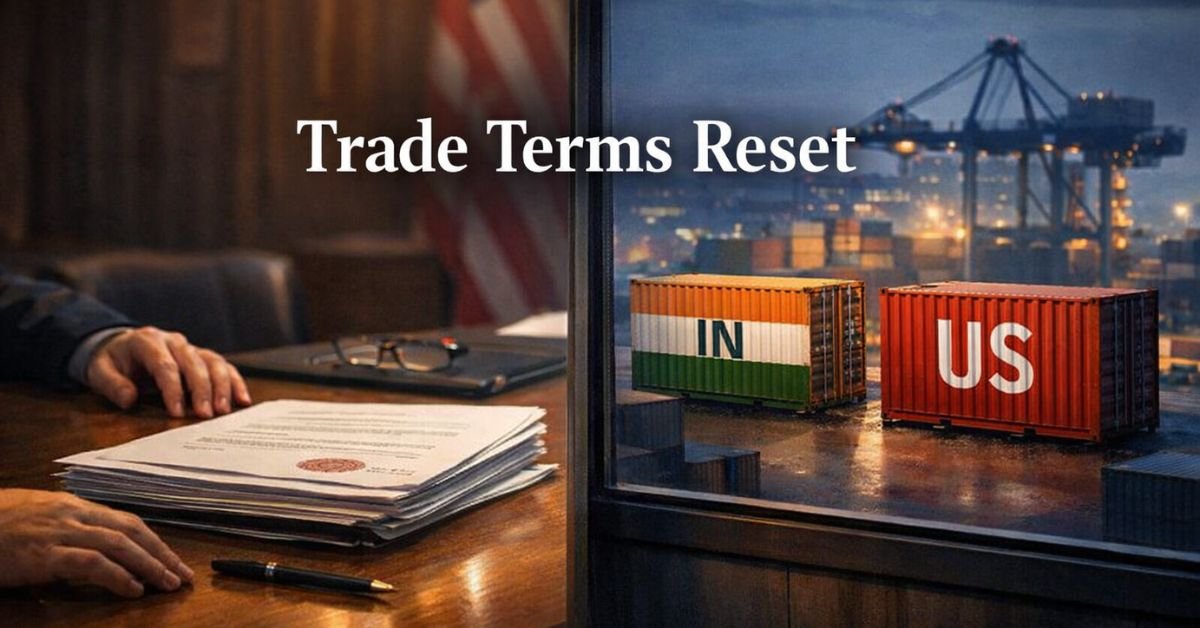
The India US trade deal 2026 moved from negotiation rooms into policy reality today, with both governments confirming the final structure of their interim trade framework.
What makes today different is not the announcement itself, but the clarity—tariffs, timelines, and political intent are now publicly aligned. For businesses and exporters, this marks the first real signal that years of stalled trade talks have shifted direction.
A Deal Years in the Making, But Finalized in Weeks
Trade negotiations between India and the United States have rarely followed a straight path. Disputes over tariffs, agriculture, digital taxes, and visas have repeatedly slowed progress.
What changed in early 2026 was urgency.
Rising global trade fragmentation, election pressure in Washington, and India’s push to secure export stability created a narrow window. Both sides used it.
Officials confirmed today that the interim trade framework is locked, clearing the way for a broader bilateral agreement later this year. (India US Trade Deal 2026)
This is not a symbolic pact. It alters cost structures across multiple industries.
What the India US Trade Deal 2026 Actually Covers
Despite the word “interim,” the agreement is operational.
The framework outlines clear tariff ceilings, market access rules, and sector-specific commitments that take effect in phases.
Key areas include:
- Manufactured goods and industrial components
- Textiles, apparel, and leather exports
- Select agricultural commodities
- Energy, defence procurement, and aircraft parts
While not all tariffs are eliminated, several have been sharply reduced, especially on Indian exports entering the US market. (India US Trade Deal 2026)
Quick Snapshot: At a Glance
- US duties on key Indian exports cut significantly
- India commits to long-term purchases of US goods
- Agricultural red lines largely maintained by India
- Energy and defence trade expanded
- A full bilateral treaty expected later in 2026
What Changed Today, Not Last Month
Negotiations were known. Intent was discussed.
Today’s update matters because implementation details were confirmed.
Tariff slabs, compliance standards, and review mechanisms are no longer drafts. They are policy positions endorsed by both governments.
This gives exporters something they have lacked for years—predictability.
Indian textile exporters, for example, now know which product lines qualify for reduced duties and when those changes apply. US manufacturers get similar clarity on Indian market access.
Why This News Matters Beyond Trade Numbers
Trade deals often sound abstract until prices move.
Lower tariffs can translate into cheaper goods, stronger export orders, and more stable employment in export-heavy regions. For India, that includes clusters dependent on garments, marine products, and light manufacturing.
For the US, the deal strengthens supply chain diversification at a time when over-dependence on single markets has become politically risky.
This is as much about economic security as trade volume. (India US Trade Deal 2026)
Industry Reaction: Relief, Not Celebration
Initial reactions from industry groups on both sides have been cautious.
Indian exporters describe the agreement as “workable,” not revolutionary. Many note that while tariffs are lower, compliance and standards will be stricter.
US business groups welcome expanded access to India’s industrial market but remain watchful on regulatory timelines.
The tone is telling.
This deal is viewed as a stabiliser, not a windfall. (India US Trade Deal 2026)
Political Calculus Behind the Agreement
Trade policy rarely moves without political alignment.
In Washington, the deal allows the administration to project toughness without isolationism. In New Delhi, it avoids opening politically sensitive sectors while still expanding exports.
Both sides can sell the agreement domestically without appearing to concede core interests.
That balance explains why the deal progressed quietly—and why it held.
Expert Perspective: Why This Deal Is Structurally Different
Trade analysts point out that previous India–US trade talks failed because they aimed too broadly, too quickly.
The 2026 framework flips that logic.
Instead of chasing a single, sweeping agreement, it locks in narrow but enforceable commitments. Review clauses are built in. Dispute resolution is clearer.
This structure reduces the risk of collapse if political leadership changes.
That may be its most important feature.
What Could Happen Next
The interim framework is not the endpoint.
Officials from both governments have indicated that negotiations will now move toward a full bilateral trade agreement, potentially by the end of 2026.
Future talks are expected to cover:
- Digital trade and data governance
- Services and professional mobility
- Deeper agricultural market access
- Intellectual property alignment
Each of these areas carries political sensitivity. Progress will be slower.
But the groundwork is now in place.
Why Markets Are Watching Closely
Currency traders, equity markets, and logistics firms have already begun factoring the agreement into forecasts.
Stable trade terms reduce volatility. That alone can shift investment decisions.
While markets did not surge on the news, they responded with calm optimism—a sign the deal was credible enough to be priced in.

My name is Ankit Yadav, and I am a passionate digital journalist and content creator. I write about technology, entertainment, sports, and current affairs with the aim of delivering unique, accurate, and engaging information to my readers.
I believe news should not only inform but also provide clear insights and fresh perspectives. That’s why I focus on making my articles easy to read, reliable, and meaningful.
📌 I specialize in Tech Trends, Latest News, Cybersecurity, Digital Media, Sports, and Entertainment.
📌 My mission is to share fast, authentic, and valuable updates with every article I publish.