Opening Paragraph
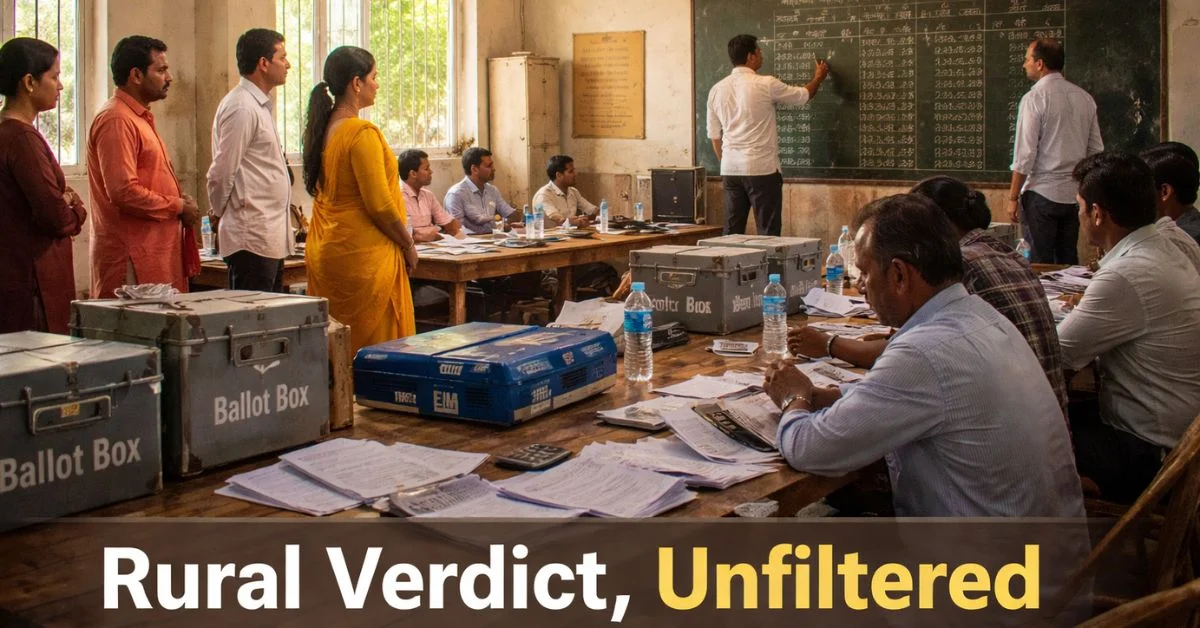
The ZP election results 2026 are unfolding district by district today, bringing early clarity to how rural voters have reshaped local power. Several long-held bastions are showing cracks, while fresh faces are emerging in unexpected pockets.
With counting updates still coming in, today’s numbers are already setting the tone for political conversations beyond village boundaries.
Rural Counting Day That Didn’t Follow the Script
The story of the ZP election results 2026 is not one of landslides or sweeping dominance. Instead, it is being written in narrow margins, late-count turnarounds, and quiet upsets across districts.
From early morning, counting centres reported fluctuating leads. In several places, candidates who were trailing in the first rounds pulled ahead as rural booths were added later in the count. This pattern has kept party offices cautious rather than celebratory.
What stands out is the absence of a single, uniform trend. Each district seems to be telling its own political story.
District-Level Shifts That Matter More Than Totals
While statewide seat tallies draw headlines, the real meaning of the ZP election results 2026 lies in district-specific changes.
In traditionally stable regions, voter loyalty appears thinner than before. Margins that once crossed thousands have now dropped to double or triple digits. Meanwhile, districts considered politically fragmented have delivered clearer verdicts.
This uneven pattern suggests that voters weighed local performance more heavily than party branding.
Voters Looked Local, Not Loud
One of the defining features of this election cycle is how quietly it unfolded on the ground. There were fewer mass rallies, fewer headline-making promises, and far more door-to-door outreach.
Candidates who focused on:
- Road connectivity
- Water supply consistency
- Health centre access
- School infrastructure
have performed better than those who leaned heavily on broader political narratives.
The ZP election results 2026 reflect this shift clearly.
New Faces Break Through Familiar Names
Another striking feature of today’s results is the rise of first-time winners. In multiple talukas, younger candidates and independents have edged out long-serving representatives.
This does not signal rejection of experience, but it does underline voter fatigue with absent leadership. Where incumbents were visible and responsive, they survived. Where they were not, voters moved on without hesitation.
Women’s Representation Holds Ground
Unlike some previous cycles, women candidates have maintained — and in certain areas expanded — their presence in Zilla Parishad bodies.
Several women-led constituencies reported decisive wins rather than close finishes. This suggests that gender-based skepticism at the local level is gradually weakening, especially when candidates are associated with on-ground work.
The ZP election results 2026 reinforce this gradual but important shift.
Coalition Arithmetic Becomes Complicated
As seat numbers firm up, post-result discussions have already begun. No single party appears comfortably positioned across all districts, making alliances unavoidable in many Zilla Parishads.
This has created a second layer of politics — quieter, strategic, and often decisive — that will unfold over the next few days.
Observers note that coalition talks at the local level tend to be more pragmatic than ideological.
At-a-Glance Snapshot
- Counting still in progress across several districts
- Margins narrower than previous ZP elections
- Local performance outweighed party symbolism
- First-time candidates recorded notable wins
- Coalition outcomes likely in multiple regions
What Changed Today
Today’s update added late-count rural booths, altering early trends in several districts. Constituencies that appeared settled by mid-morning shifted again by afternoon.
This phase of counting has been crucial in shaping the ZP election results 2026, reminding observers that rural votes often arrive last — and carry weight.
Why This News Matters Beyond Zilla Parishads
Zilla Parishads may operate at the district level, but their political signals travel far.
These results influence:
- Allocation of development funds
- Selection of future assembly candidates
- Party strategies for upcoming state elections
The ZP election results 2026 are therefore being read as a mood indicator rather than just a local outcome.
Reading the Results Like an Analyst
What’s visible in today’s numbers is not anger, but recalibration. Voters did not vote en masse against any single force. They rewarded delivery and punished neglect.
This suggests rural electorates are becoming more selective, not more volatile.
That distinction matters.
What Could Happen Next
Over the next week, attention will shift from counting halls to meeting rooms. Formation of Zilla Parishad leaderships, selection of chairpersons, and alliance negotiations will dominate.
If current trends hold, governance stability will depend less on party size and more on cooperation.

My name is Ankit Yadav, and I am a passionate digital journalist and content creator. I write about technology, entertainment, sports, and current affairs with the aim of delivering unique, accurate, and engaging information to my readers.
I believe news should not only inform but also provide clear insights and fresh perspectives. That’s why I focus on making my articles easy to read, reliable, and meaningful.
📌 I specialize in Tech Trends, Latest News, Cybersecurity, Digital Media, Sports, and Entertainment.
📌 My mission is to share fast, authentic, and valuable updates with every article I publish.