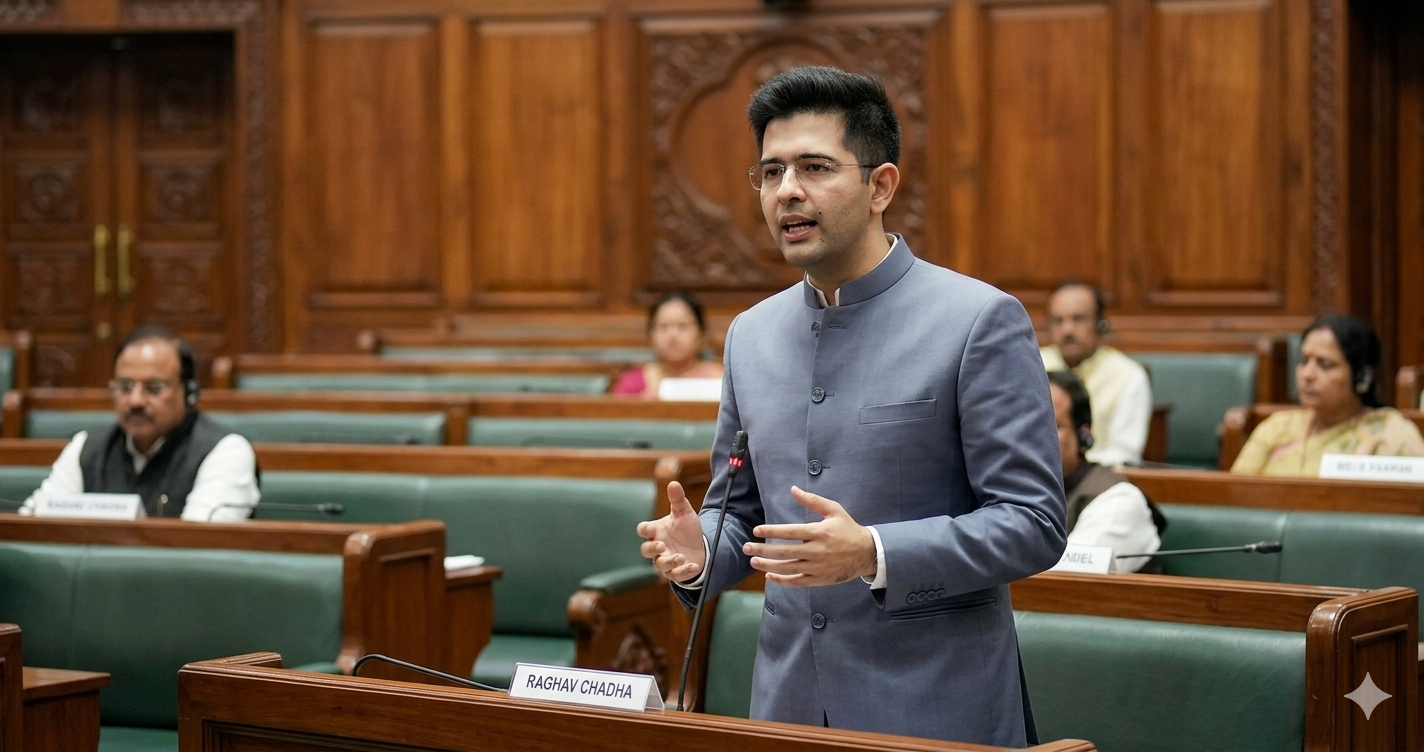
Raghav Chadha Rajya Sabha Controversy: A Political Analysis
The Raghav Chadha Rajya Sabha controversy has sparked a broader conversation about internal party dynamics, parliamentary conduct, and the evolving role of young leaders in Indian politics. While headlines have focused on the immediate developments, the deeper significance lies in what this episode reveals about institutional functioning and political strategy.
At the center of the issue is Raghav Chadha, a prominent face of the Aam Aadmi Party (AAP), who rose rapidly through the party ranks to become one of its key representatives in the Rajya Sabha. Known for his articulate speeches and policy-oriented interventions, Chadha symbolized a new generation of politicians attempting to blend activism with governance.
The Institutional Context Behind the Controversy
To understand the Raghav Chadha Rajya Sabha controversy, one must first examine the role of the Rajya Sabha itself. As defined by the Parliament of India, the upper house serves as a revising chamber, tasked with scrutinizing legislation and representing states’ interests at the national level.
Chadha’s presence in this institution was not merely symbolic. He actively participated in debates on financial accountability, governance reforms, and social issues. However, controversies in such spaces often emerge not from a single event, but from a pattern of political positioning, procedural disputes, and intra-party expectations.
Beyond Headlines: What Triggered the Debate
The Raghav Chadha Rajya Sabha controversy is frequently framed as a conflict between individual assertion and organizational discipline. While specifics may vary depending on political interpretation, the underlying tension reflects a classic dilemma in party politics—how much autonomy should a leader exercise within a structured hierarchy?
Political parties in India, including AAP, operate through a mix of centralized leadership and delegated authority. When a prominent member appears to diverge from internal expectations—whether in communication style, parliamentary interventions, or public positioning—it can lead to friction.
In Chadha’s case, analysts suggest that his growing individual visibility may have intersected with internal recalibrations within the party. This does not necessarily indicate wrongdoing but highlights the delicate balance between personal political capital and collective strategy.
The Role of Parliamentary Conduct
Another dimension of the Raghav Chadha Rajya Sabha controversy relates to parliamentary norms. The Rajya Sabha operates under a strict procedural framework, guided by rules that ensure order, accountability, and decorum.
Institutions like the Rajya Sabha Secretariat play a crucial role in maintaining these standards. Any deviation—intentional or otherwise—can attract scrutiny, especially when it involves high-profile members.
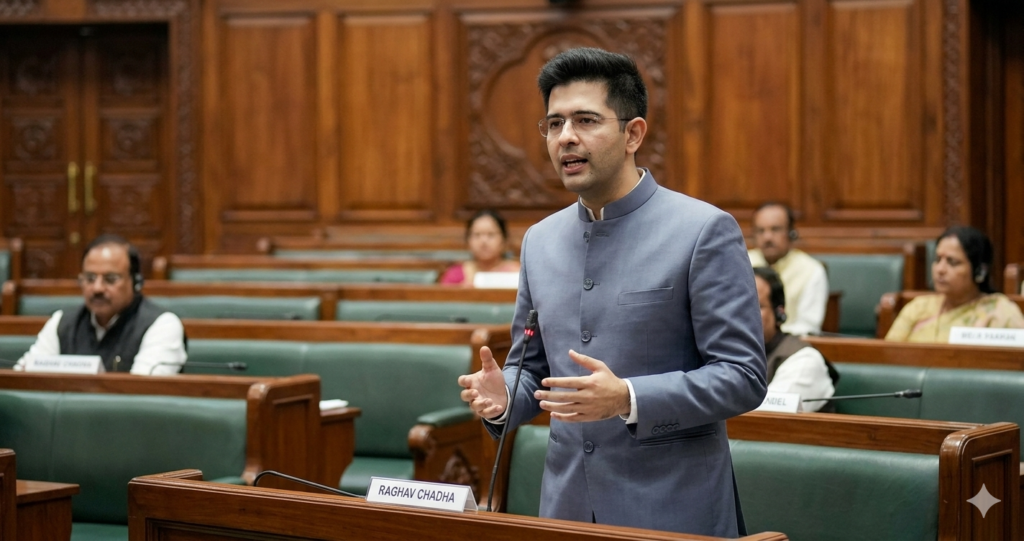
Chadha’s interventions, often sharp and issue-focused, have been both praised and criticized. Supporters view them as necessary for holding the government accountable, while critics argue that they sometimes blur the line between assertiveness and procedural compliance.
Internal Party Dynamics and Strategic Messaging
The Raghav Chadha Rajya Sabha controversy cannot be fully understood without considering internal party dynamics. Political organizations constantly evolve, responding to electoral pressures, leadership changes, and shifting public expectations.
Within AAP, which has positioned itself as a reform-oriented party, maintaining a cohesive narrative is particularly important. Leaders are expected to align with broader messaging strategies, especially in high-visibility platforms like the Rajya Sabha.
When a leader’s individual messaging begins to stand out, it can create both opportunities and challenges. On one hand, it enhances the party’s visibility; on the other, it risks diluting centralized communication. The controversy, therefore, reflects not just a disagreement but a strategic recalibration.
Youth Leadership and Political Expectations
A notable aspect of the Raghav Chadha Rajya Sabha controversy is its implication for young leaders in Indian politics. Chadha represents a cohort that entered politics with professional backgrounds and policy-driven approaches.
This shift has brought new energy to parliamentary debates but also new expectations. Younger leaders are often expected to be both independent thinkers and disciplined party representatives—a combination that is not always easy to maintain.
The controversy highlights how these expectations can collide. It raises an important question: should emerging leaders prioritize institutional conformity, or should they push boundaries to redefine political engagement?
Public Perception and Media Framing
Public understanding of the Raghav Chadha Rajya Sabha controversy is heavily influenced by media narratives. News coverage tends to emphasize conflict, often simplifying complex institutional and political processes into binary interpretations.
However, a more nuanced view reveals that such controversies are part of a larger democratic process. They reflect ongoing negotiations between authority and accountability, individual agency and collective responsibility.
For the public, the key takeaway should not be limited to who is right or wrong, but rather how such episodes shape governance and political culture.
Long-Term Implications
Looking ahead, the Raghav Chadha Rajya Sabha controversy may have several long-term implications:
- For Chadha: It could redefine his political trajectory, influencing how he positions himself within and beyond the party framework.
- For AAP: It may lead to internal restructuring or clearer guidelines on leadership roles and communication.
- For Parliament: It underscores the importance of maintaining procedural integrity while allowing robust debate.
Ultimately, controversies of this nature are not anomalies; they are integral to the functioning of a vibrant democracy.
A Broader Democratic Perspective
From a wider perspective, the Raghav Chadha Rajya Sabha controversy serves as a case study in democratic evolution. It highlights the tensions inherent in balancing innovation with tradition, individuality with institutional norms.
India’s parliamentary system, supported by bodies like the Parliament and its secretariats, is designed to accommodate such tensions. The challenge lies in ensuring that they lead to constructive outcomes rather than prolonged discord.

My name is Ankit Yadav, and I am a passionate digital journalist and content creator. I write about technology, entertainment, sports, and current affairs with the aim of delivering unique, accurate, and engaging information to my readers.
I believe news should not only inform but also provide clear insights and fresh perspectives. That’s why I focus on making my articles easy to read, reliable, and meaningful.
📌 I specialize in Tech Trends, Latest News, Cybersecurity, Digital Media, Sports, and Entertainment.
📌 My mission is to share fast, authentic, and valuable updates with every article I publish.