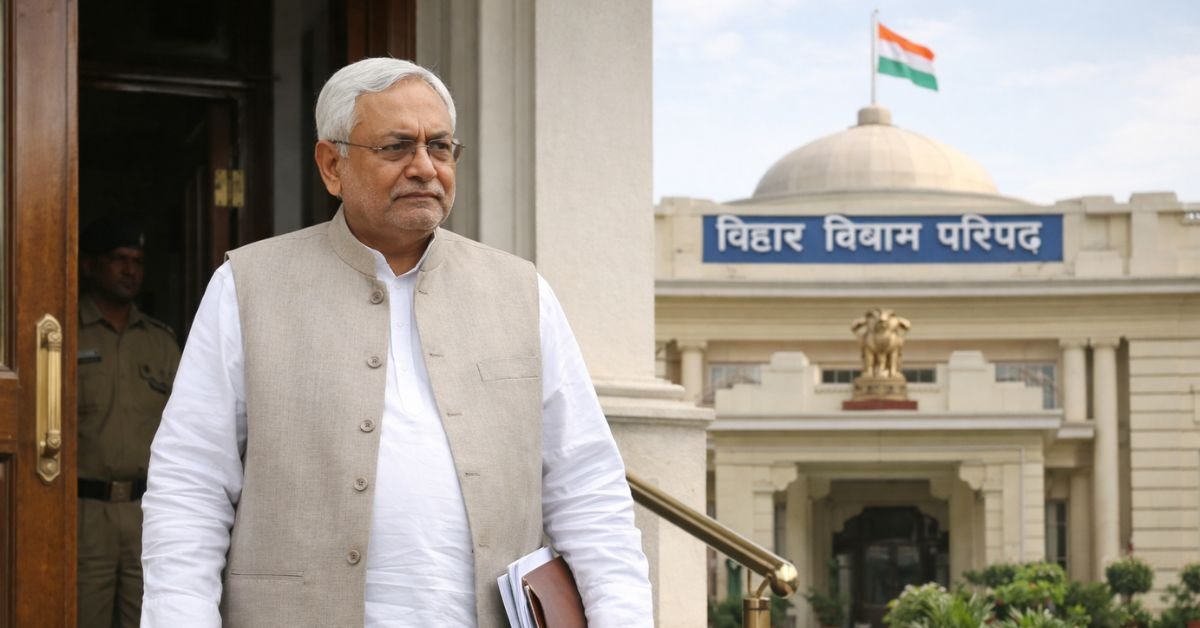
Why Nitish Kumar Resigned MLC: Political Strategy Explained
The question of why Nitish Kumar resigned MLC is not just about a procedural political move—it reflects a deeper shift in Bihar’s evolving power structure. At first glance, resignation from the Bihar Legislative Council may appear symbolic, but in Indian politics, such decisions are rarely isolated. They often signal strategic repositioning, alliance recalibration, or preparation for a larger national role.
To understand the reasoning, one must move beyond headlines and examine institutional frameworks, political incentives, and timing.
The Role of an MLC in Bihar’s Political Structure
Before examining why Nitish Kumar resigned MLC, it helps to understand what the position represents. Members of the Legislative Council (MLCs) are part of the upper house in bicameral state legislatures like Bihar. Unlike MLAs, MLCs are not directly elected by the general public but through electoral colleges or nominations.
According to the Election Commission of India, Legislative Councils function as revising chambers, offering legislative scrutiny rather than direct governance authority. This means that holding an MLC position is often about continuity in politics rather than executive power.
For a leader of Nitish Kumar’s stature—who has served multiple terms as Chief Minister—the role of MLC carries limited strategic value unless tied to a larger objective.
Timing: The Most Important Clue
The timing of the resignation provides the first major hint. Political resignations are rarely random. They tend to align with transitions—either institutional or strategic.
In this case, the resignation aligns with:
- Speculation about a shift to national-level politics
- Possible entry into the Rajya Sabha
- Internal adjustments within party and alliance structures
This suggests that understanding why Nitish Kumar resigned MLC requires viewing the move as preparatory rather than reactive.
Strategic Repositioning Within Indian Politics
Indian politics often operates on layered positioning. Leaders shift roles not because they are stepping back, but because they are stepping sideways—or upward.
The Rajya Sabha, governed under the framework of the Parliament of India, offers a different kind of political influence. It allows leaders to:
- Participate in national policymaking
- Maintain relevance without direct electoral pressure
- Influence coalition dynamics at the central level
If Nitish Kumar transitions toward such a role, resigning from the MLC position becomes a logical step rather than an abrupt decision.
Coalition Politics and Power Balancing
Another dimension to why Nitish Kumar resigned MLC lies in coalition politics. Bihar has long been a state where alliances determine stability. Whether aligned with the BJP or part of a broader opposition bloc, Nitish Kumar has historically demonstrated flexibility in political alignment.
Resigning from an institutional position can serve multiple purposes in such a context:
- Creating space for new leadership within the state
- Strengthening bargaining power within alliances
- Signaling intent without formal announcements
The move, therefore, may be less about relinquishing power and more about redistributing it strategically.
Internal Party Dynamics
No analysis of why Nitish Kumar resigned MLC is complete without considering internal party factors. Political parties evolve, and leadership transitions—whether gradual or sudden—require careful staging.
In many cases, senior leaders step away from certain roles to:
- Promote second-line leadership
- Manage internal dissent
- Prepare for generational shifts
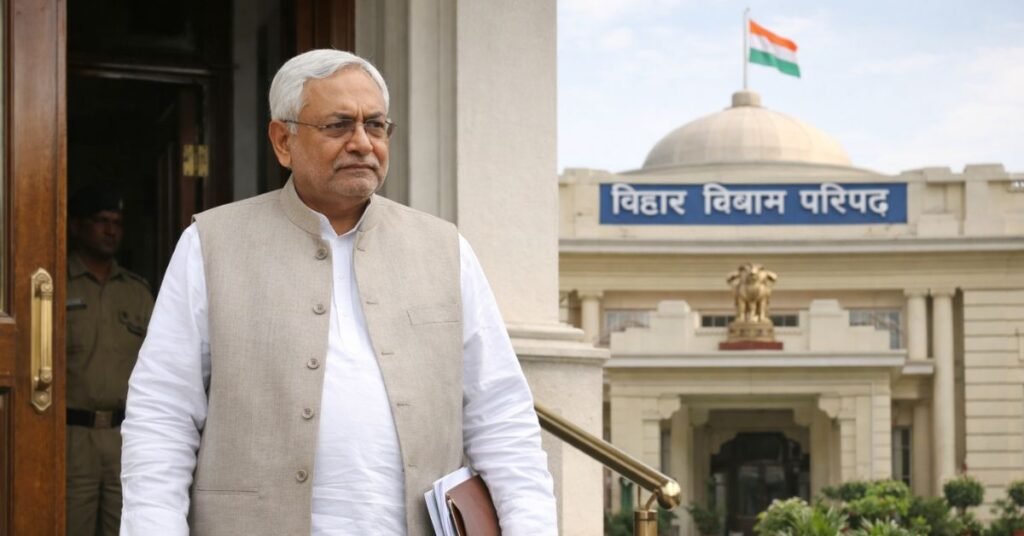
Such transitions are often subtle but significant. By resigning from the MLC position, Nitish Kumar may be enabling structural adjustments within his party without triggering instability.
Governance vs. Political Longevity
There is also a philosophical angle to this decision. Leaders who have spent decades in governance often reach a point where maintaining influence becomes more important than holding office.
The distinction is critical:
- Governance roles (like Chief Minister) demand constant administrative engagement
- Strategic roles (like Rajya Sabha membership) allow long-term political influence
Seen from this perspective, why Nitish Kumar resigned MLC could be linked to a shift from administrative leadership to strategic oversight.
Institutional Constraints and Opportunities
India’s constitutional structure imposes certain limitations on holding multiple positions or transitioning between them. The Parliament of India and state legislatures operate under defined rules regarding membership.
Resigning from one legislative body is often a prerequisite for entering another. This procedural necessity can sometimes appear as a political decision, even when it is largely administrative.
However, in practice, such procedural moves are rarely devoid of strategic intent.
Public Perception vs. Political Reality
Public discourse often interprets resignations as signs of crisis or retreat. But political reality tends to be more nuanced.
In this case, why Nitish Kumar resigned MLC may not indicate weakness or instability. Instead, it could reflect:
- Controlled transition
- Tactical repositioning
- Long-term planning
Experienced political leaders rarely make abrupt decisions without aligning them with broader objectives.
What This Means for Bihar
While the resignation is a personal political move, its implications extend to Bihar’s governance landscape.
Potential outcomes include:
- Emergence of new leadership within the state
- Reconfiguration of alliance dynamics
- Increased focus on national-level politics
For Bihar, this could mean a gradual shift in political priorities, depending on how the transition unfolds.
A Calculated Move, Not an Exit
Ultimately, the question of why Nitish Kumar resigned MLC is best understood as part of a calculated political sequence. It reflects planning rather than pressure, and positioning rather than withdrawal.
In Indian politics, exits are rarely final—they are often transitions into different arenas of influence.

My name is Ankit Yadav, and I am a passionate digital journalist and content creator. I write about technology, entertainment, sports, and current affairs with the aim of delivering unique, accurate, and engaging information to my readers.
I believe news should not only inform but also provide clear insights and fresh perspectives. That’s why I focus on making my articles easy to read, reliable, and meaningful.
📌 I specialize in Tech Trends, Latest News, Cybersecurity, Digital Media, Sports, and Entertainment.
📌 My mission is to share fast, authentic, and valuable updates with every article I publish.