How AI and Digital Ticketing Can Reduce TTE Corruption
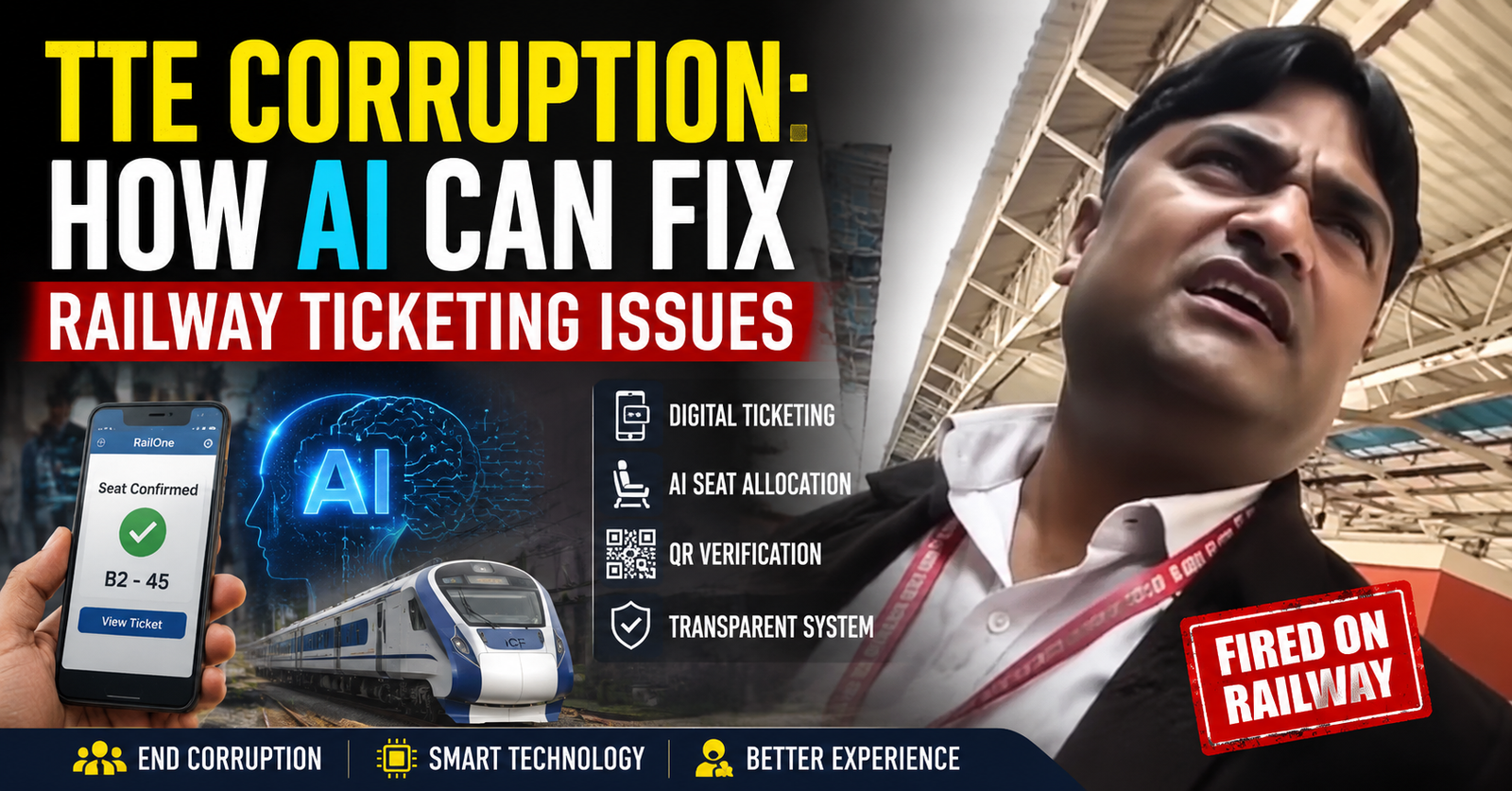
A short viral video recently sparked another debate around Indian Railways. In the clip, a travelling ticket examiner (TTE) was allegedly seen offering a seat to a passenger for cash instead of following the proper ticketing process. The railway official was later suspended, and social media reacted exactly as expected — anger, memes, outrage, and endless commentary. (TTE Corruption)
But after the noise settles, one important question remains.
Why do these situations continue to happen so frequently in Indian trains?
Most people immediately blame the TTE, and in some cases, that criticism is fair. But the larger issue goes beyond one railway employee or one viral incident. The real problem lies in a system that still depends heavily on manual decisions, paper verification, and informal seat adjustments during travel.
That creates space for confusion, negotiation, and sometimes corruption.
The conversation around TTE corruption usually focuses on punishment. Much less attention is given to prevention. And that is where technology could completely change the way onboard ticketing works in India. (TTE Corruption)
The Problem Is Bigger Than One Viral Video
Anyone who travels regularly by train in India already understands how common unofficial seat adjustments have become.
A passenger boards with a waiting list ticket. Another misses the train. A few seats become vacant after the chart is prepared. Then begins the familiar conversation with the TTE.
“Sir, koi seat mil sakti hai?”
Most of the time, passengers are not even trying to cheat the system. They are simply desperate. Tatkal tickets disappear within minutes. Emergency travel is common. Families often travel without confirmed reservations. (TTE Corruption)
In these situations, the TTE becomes the only person with real-time control over vacant seats.
That level of manual authority creates two problems:
- passengers become dependent on personal interaction
- transparency disappears
The passenger rarely knows:
- how many seats are actually vacant
- who gets priority
- what the official process is
- whether payment is being recorded properly
This uncertainty creates an environment where unofficial cash settlements can quietly exist.
Why Digital Ticketing Alone Is Not Enough
Indian Railways has already digitized many parts of the booking process. People book tickets online, check PNR status on apps, and even order food digitally during travel.
But onboard seat allocation still feels surprisingly old-fashioned.
The issue is not that technology is absent. The issue is that the technology stops at the boarding stage.
After the train starts moving, many decisions still rely on manual judgment. That is exactly where disputes and misuse can happen. (TTE Corruption)
For example, imagine a train where:
- every vacant seat updates automatically in real time
- passengers can request available seats directly through an app
- seat upgrades happen digitally
- onboard payments are recorded instantly
- every allocation leaves a digital trail
Suddenly, there is much less room for unofficial negotiation.
The goal should not be to remove TTEs completely. Their role is still important for passenger support, ticket verification, and emergency handling. But technology can reduce situations where too much depends on one individual’s discretion. (TTE Corruption)
How AI Could Actually Help
Whenever people hear “AI in railways,” they often imagine futuristic robots or automated trains. But the practical use of AI could be much simpler and more useful.
One major improvement could be predictive seat management.
Indian Railways already has massive travel data:
- no-show passenger patterns
- cancellation trends
- route demand
- seasonal rush behavior
- station-wise boarding data
AI systems can analyze this data to predict vacant seats more accurately during a journey.
For example, if the system predicts a high probability that certain passengers will not board after a major station, those seats could automatically become available in a verified digital queue.
Instead of passengers personally negotiating with the TTE, the system itself could allocate seats based on waiting list priority, emergency category, or payment confirmation.
This would reduce both confusion and favoritism.
The Real Benefit Is Passenger Trust
One interesting thing about railway controversies is that people often lose trust faster than railways lose passengers.
Even after viral incidents, trains remain full. Demand is not the problem.
Trust is.
Passengers can tolerate delays more easily than they tolerate unfairness.
If two people enter the same train with similar tickets but only one gets a confirmed seat through unofficial methods, frustration builds quickly. Over time, this damages public confidence in the system.
A transparent digital allocation system could change that perception.
Passengers would at least comprehend if they were not given a seat:
- why they did not get one
- who received priority
- how the allocation happened
That clarity matters more than railways sometimes realize.
QR Verification Could Reduce Fake Transactions
Another practical solution is QR-based onboard verification.
Currently, many onboard transactions still depend on verbal communication and manual checking. A QR-based system could simplify this process significantly. (TTE Corruption)
Imagine this scenario:
- Passenger requests seat upgrade through app
- AI checks availability
- System generates official payment request
- Passenger pays digitally
- QR receipt appears instantly
- TTE only verifies the QR code
Now there is:
- no unofficial cash exchange
- no confusion over payment
- complete transaction history
This approach would also protect honest TTEs from false accusations.
That part is important because not every railway official is involved in wrongdoing. Sometimes viral clips show only part of a conversation, while the full context remains unclear.
Digital systems protect both passengers and railway staff.
Technology Alone Cannot Solve Everything
At the same time, technology is not a magic solution.
Railways still face infrastructure limitations, internet connectivity issues on certain routes, and an enormous passenger load. Implementing real-time digital systems across thousands of trains is not simple.
There is also a human side to railway travel that apps cannot fully replace.
Sometimes passengers need flexibility during emergencies. Elderly travelers often rely on direct assistance from railway staff. Completely removing human decision-making may create different problems.
The smarter approach is balance.
Technology should increase transparency while still allowing railway staff to handle genuine exceptional situations.
The Bigger Question Indian Railways Must Answer
The recent TTE controversy became viral because people recognized something familiar in it.
Not necessarily corruption alone, but the feeling that important decisions inside trains still happen informally.
That is the real issue Indian Railways now has an opportunity to fix.
The future of train travel in India will not depend only on faster trains or modern stations. It will also depend on whether passengers feel the system itself is fair, trackable, and transparent.
AI and digital ticketing may not completely eliminate TTE corruption overnight.
But they can reduce the situations where corruption becomes possible in the first place.
And that is probably where real reform begins.

My name is Ankit Yadav, and I am a passionate digital journalist and content creator. I write about technology, entertainment, sports, and current affairs with the aim of delivering unique, accurate, and engaging information to my readers.
I believe news should not only inform but also provide clear insights and fresh perspectives. That’s why I focus on making my articles easy to read, reliable, and meaningful.
📌 I specialize in Tech Trends, Latest News, Cybersecurity, Digital Media, Sports, and Entertainment.
📌 My mission is to share fast, authentic, and valuable updates with every article I publish.