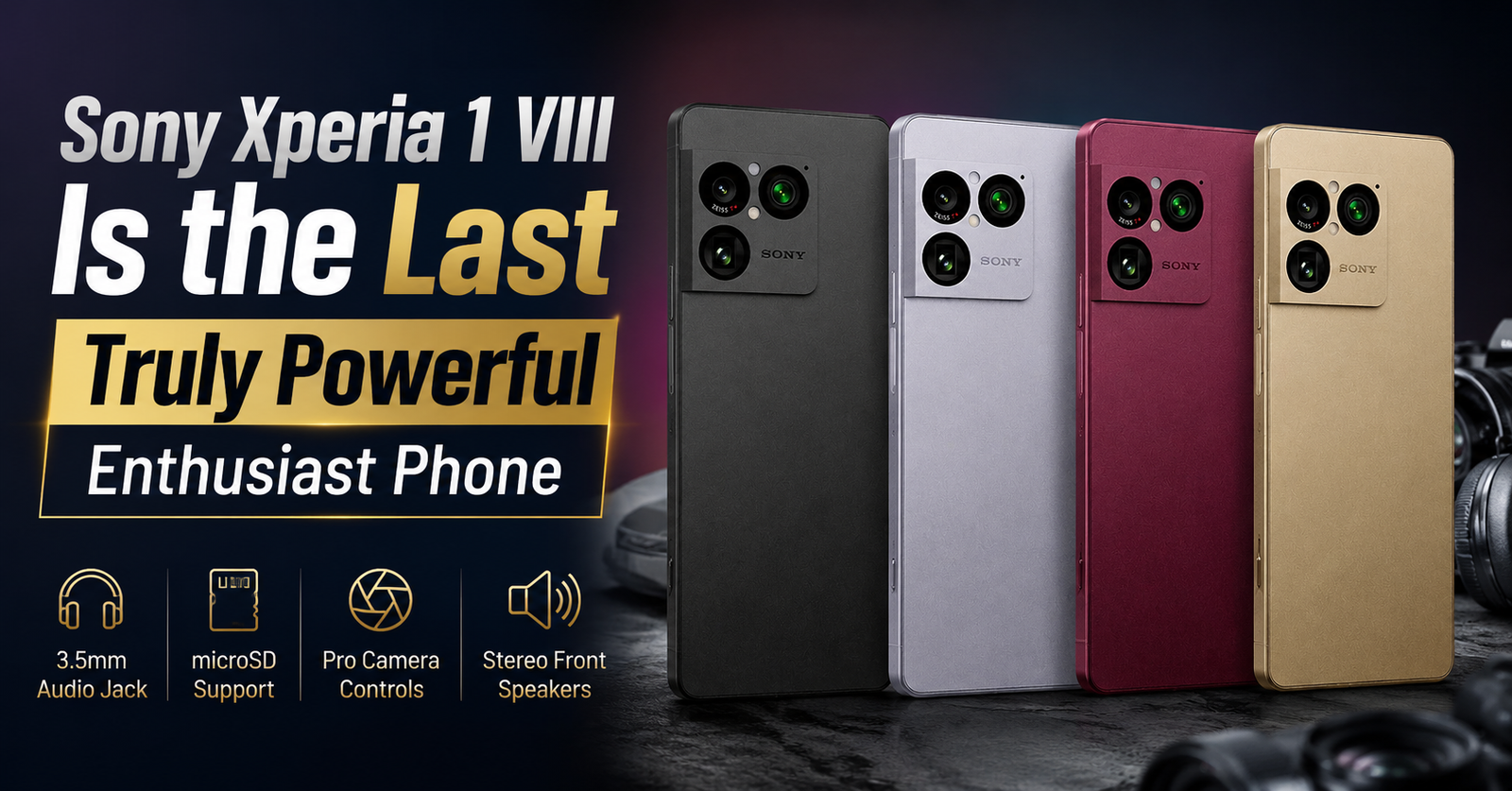
Sony Xperia 1 VIII Is the Last Truly Powerful Enthusiast Phone
Most flagship smartphones today feel surprisingly similar. The designs are cleaner, the software is polished, and the cameras are impressive, but after a point, many phones start blending into each other. Whether you pick a premium Samsung, iPhone, or another Android flagship, the experience often follows the same formula.
That’s why the Sony Xperia 1 VIII feels unusual in 2026.
Not because it’s radically futuristic, but because Sony continues building phones for people who actually care about things most brands quietly removed years ago.
A Flagship That Still Feels Different
The Xperia 1 VIII doesn’t try too hard to look trendy. There’s no flashy AI branding everywhere, no oversized camera gimmick, and no attempt to copy what Apple or Samsung are doing this year.
Instead, Sony stayed focused on a very specific type of user.
The phone still includes a headphone jack. It still supports microSD cards. It still has front-facing stereo speakers and a dedicated camera shutter button. In an industry where brands constantly remove features in the name of “minimalism,” Sony keeps adding reasons for enthusiasts to stay interested.
For many people, these things sound small until they actually need them.
A creator traveling with a camera setup can instantly transfer files using expandable storage. Someone listening to lossless audio can use wired headphones without adapters. Mobile photographers can half-press the shutter button to focus, just like a real camera.
These are practical details, not marketing features.
Why Most Brands Moved Away From This Approach
The modern smartphone market rewards simplicity.
Most companies want devices that appeal to the largest possible audience, which usually means reducing complexity. Phones became thinner, cleaner, and more software-driven. Features used by a smaller percentage of users slowly disappeared.
Sony never completely followed that strategy.
That’s partly why Xperia phones remain niche. They don’t always feel beginner-friendly. Camera apps include manual controls many casual users never touch. The design language is more functional than flashy. Even the display aspect ratio feels different compared to mainstream devices.
But that difference is exactly why some people still prefer Xperia phones.
The Xperia 1 VIII Feels Designed Around Real Usage
The Sony Xperia 1 VIII’s deliberate design is one intriguing feature.
Take the display, for example. Sony continues avoiding punch-hole cutouts by keeping slim bezels instead. Some users may prefer edge-to-edge screens, but others genuinely enjoy watching videos or gaming without a floating camera interrupting the display.
The same applies to the audio experience.
Most flagship phones today prioritize wireless ecosystems. Sony supports wireless audio too, but it hasn’t abandoned wired users in the process. That matters more than companies realize, especially among music enthusiasts who already invest heavily in premium headphones.
There’s also something refreshing about Sony’s camera philosophy.
While many smartphones aggressively process photos to make them instantly social-media ready, Xperia devices still lean closer to traditional photography. Images often look more natural instead of artificially sharpened or oversaturated.
That approach won’t appeal to everyone. Some users prefer brighter and more dramatic images straight from the camera. But photographers who edit their shots later usually appreciate the extra control.
The Camera Changes Say a Lot About Sony
The Xperia 1 VIII also introduced a redesigned camera system and a larger telephoto sensor, which received plenty of attention online. But one detail didn’t get discussed enough: Sony reportedly moved away from its continuous optical zoom setup.
That decision actually reveals something important.
Sony seems to be prioritizing image quality over experimental hardware features now. A larger sensor improves low-light performance and detail consistency in real-world situations, even if it means losing a technically impressive zoom mechanism.
For everyday users, that trade-off probably makes sense.
A creator filming at night or shooting indoor portraits benefits more from better sensor performance than a complicated moving lens system most people rarely use properly.
It’s one of those decisions that sounds less exciting in marketing headlines but improves actual usability.
Why Enthusiasts Still Care About Xperia Phones
There’s a growing group of users who feel modern smartphones have become too controlled and predictable.
Everything is optimized for automation now. Cameras process images automatically, apps decide battery behavior, and software increasingly hides advanced settings from users.
Sony takes a different route.
The Xperia experience still gives users room to adjust things manually. Whether it’s photography controls, audio preferences, or expandable storage, the phone feels less restrictive than many competitors.
That matters for people who enjoy technology as a hobby instead of just a utility.
A good example is mobile photography enthusiasts. Someone shooting manual photos during a street photography session may genuinely enjoy Xperia’s camera controls because they resemble Sony Alpha cameras more than typical smartphone apps.
That familiarity creates a stronger connection between the phone and the user.
The Problem Sony Still Has
Even with all these strengths, Xperia phones remain difficult to recommend universally.
The pricing is high, software support still trails behind competitors, and Sony’s marketing presence feels surprisingly weak in many regions. In some countries, people barely even know Xperia flagships still exist.
That creates an interesting contradiction.
Sony arguably understands enthusiast users better than many larger smartphone brands, yet its phones rarely become mainstream recommendations because the company doesn’t aggressively compete on ecosystem integration or mass-market convenience.
And honestly, that may never change.
The Xperia line feels intentionally niche now.
Why the Xperia 1 VIII Matters Anyway
The Sony Xperia 1 VIII matters because it represents a different philosophy at a time when most flagship phones are moving toward the same destination.
It’s one of the few premium smartphones still designed around enthusiasts instead of trends.
That doesn’t automatically make it the best flagship for everyone. But it does make it interesting in a market that increasingly values familiarity over individuality.
For users who care about photography controls, wired audio, expandable storage, and a more hands-on smartphone experience, the Xperia 1 VIII offers something surprisingly rare in 2026:
A flagship phone that still feels personal.

My name is Ankit Yadav, and I am a passionate digital journalist and content creator. I write about technology, entertainment, sports, and current affairs with the aim of delivering unique, accurate, and engaging information to my readers.
I believe news should not only inform but also provide clear insights and fresh perspectives. That’s why I focus on making my articles easy to read, reliable, and meaningful.
📌 I specialize in Tech Trends, Latest News, Cybersecurity, Digital Media, Sports, and Entertainment.
📌 My mission is to share fast, authentic, and valuable updates with every article I publish.