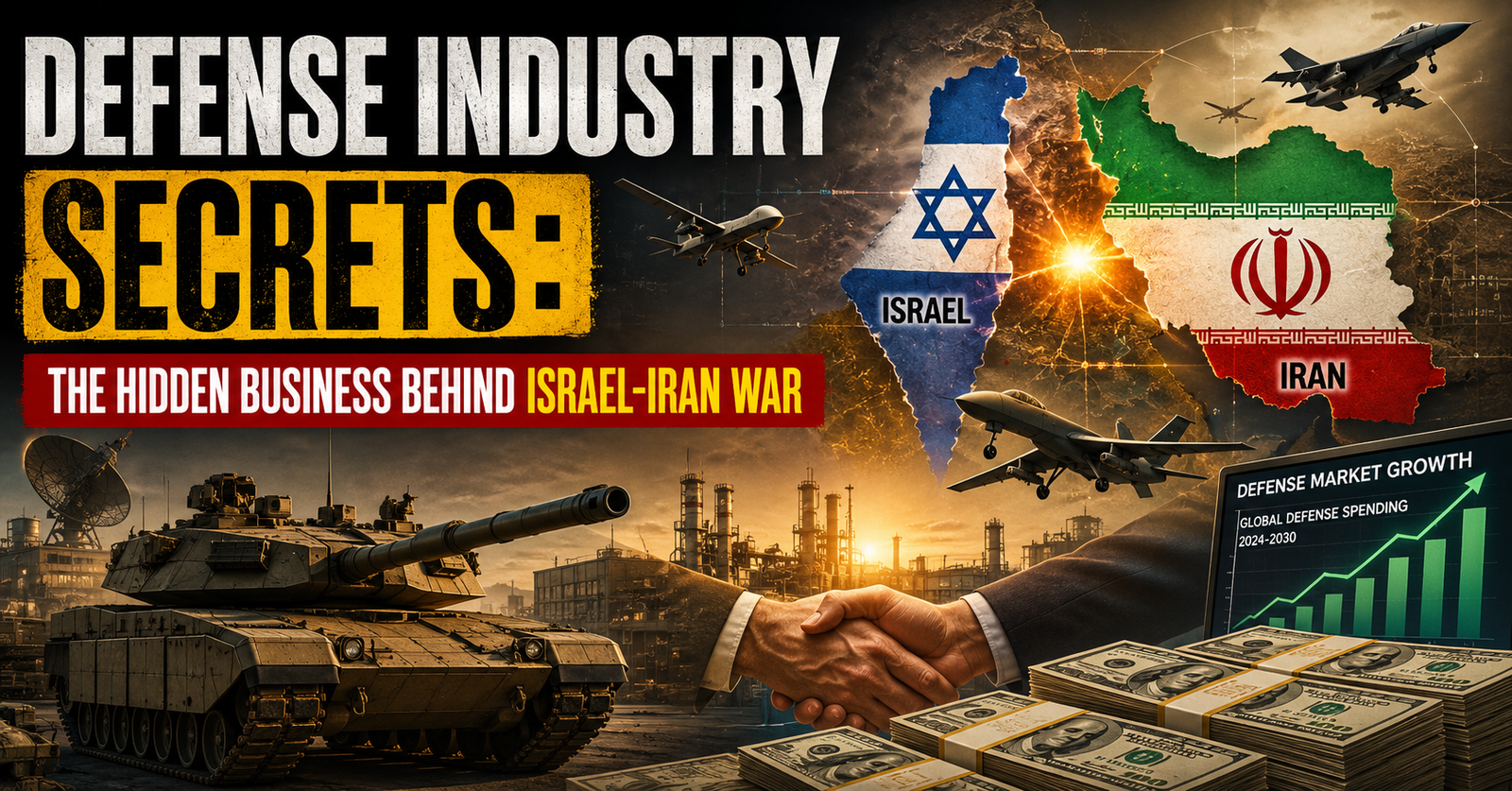
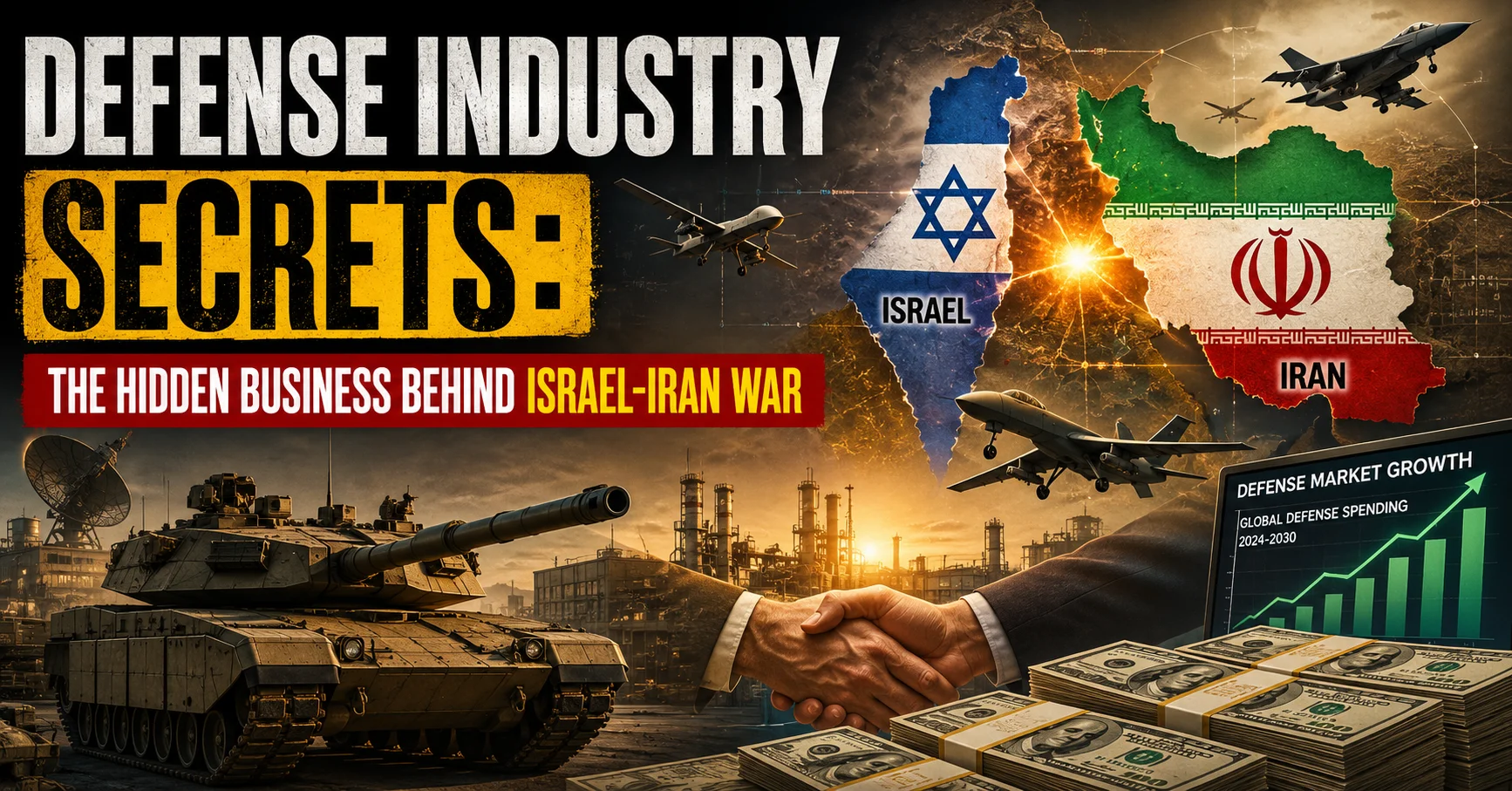
Defense Industry Secrets: The Hidden Business Behind Israel-Iran War
When headlines focus on missile launches, diplomatic tensions, and military operations, it’s easy to overlook another side of war—the business behind it. Every major conflict creates ripple effects that extend far beyond the battlefield. Governments increase military budgets, defense manufacturers receive new contracts, and industries connected to security and logistics experience sudden growth.
The recent tensions between Israel and Iran have once again drawn attention to the global Defense Industry. While the human cost of conflict remains the most important concern, understanding the economic side of modern warfare helps explain why these events influence financial markets, government policies, and even everyday consumers around the world.
Why the Defense Industry Matters During a Conflict
The Defense Industry includes companies that manufacture military aircraft, missiles, drones, naval systems, surveillance technology, cybersecurity solutions, communication equipment, and protective gear. These businesses work closely with governments, and their revenues often depend on long-term defense contracts.
Whenever geopolitical tensions rise, governments tend to reassess their national security strategies. Instead of waiting for threats to grow, many countries accelerate defense spending to strengthen military preparedness. This creates new business opportunities for defense contractors and technology firms.
The Israel-Iran conflict has reinforced this pattern. While the immediate focus remains on regional stability, many governments outside the Middle East have also reviewed their own security priorities, increasing interest in advanced defense systems and strategic partnerships.
Wars Influence More Than Just the Battlefield
One of the biggest misconceptions is that only countries directly involved in a conflict experience economic consequences. In reality, wars influence global trade, investment decisions, insurance costs, shipping routes, and commodity prices.
For example, if tensions disrupt shipping through strategic waterways such as the Strait of Hormuz, oil transportation becomes more expensive and uncertain. Energy companies, shipping firms, and insurers all adjust their operations to manage higher risks.
At the same time, defense manufacturers often see increased demand as governments place new orders for weapons, surveillance systems, missile defense platforms, and military technology.
This doesn’t mean every defense company automatically benefits, but historically, prolonged geopolitical uncertainty has led many countries to expand defense budgets.
A Real-World Example
Imagine a European country that had planned to modernize its military over the next decade. After seeing escalating tensions between Israel and Iran, policymakers decide those upgrades cannot wait.
Instead of spreading investments over ten years, the government approves emergency funding for air defense systems, cybersecurity infrastructure, and drone technology.
That decision creates work for defense manufacturers, software companies, logistics providers, and engineering firms. Thousands of employees may become involved in production, research, transportation, and maintenance.
This simple example illustrates why geopolitical conflicts often affect business sectors far beyond the countries involved in the fighting.
The Growing Role of Technology
Modern conflicts are no longer defined only by tanks and fighter jets. Artificial intelligence, cybersecurity, satellite intelligence, autonomous drones, and electronic warfare have become equally important.
Because of this shift, today’s Defense Industry increasingly overlaps with the technology sector.
Companies developing AI-powered surveillance systems, cyber defense software, secure communications, and advanced sensors are becoming key players in national security.
This trend also creates opportunities for startups specializing in defense innovation, data analysis, and military software. Investors are paying closer attention to businesses that combine technology with security solutions.
How Investors React
Financial markets often respond quickly to geopolitical developments.
Investors typically move money toward sectors they believe will remain resilient during periods of uncertainty. Defense companies, cybersecurity firms, oil producers, and precious metals frequently receive increased attention.
However, market reactions are rarely predictable. Some companies experience temporary gains, while others face supply chain disruptions or changing government policies.
For long-term investors, understanding why markets respond to geopolitical events is often more valuable than reacting emotionally to daily headlines.
The Hidden Costs of Growth
Although the Defense Industry may experience increased demand during conflicts, it’s important to recognize that economic growth in one sector often comes alongside broader global challenges.
Governments allocating larger defense budgets may reduce spending elsewhere, including infrastructure, healthcare, or education. Businesses operating in affected regions may struggle with higher transportation costs and disrupted supply chains.
Consumers may notice rising fuel prices, inflation, or increased shipping costs for imported goods.
This highlights an important reality: economic opportunities created by conflict rarely come without significant trade-offs.
Why This Topic Matters to Everyday People
Many people assume military conflicts have little connection to their daily lives unless they live nearby. In reality, global business networks mean international conflicts can influence everything from fuel prices to investment portfolios.
A smartphone manufactured in one country may depend on components shipped through international trade routes. A delay caused by regional instability can eventually affect prices in markets thousands of miles away.
Similarly, governments increasing defense spending may create jobs in engineering, manufacturing, software development, and cybersecurity while simultaneously reshaping public spending priorities.
Understanding these connections helps readers look beyond dramatic headlines and see how geopolitical events influence the global economy.
An Important Observation
One interesting trend is that today’s Defense Industry is becoming less dependent on traditional weapons alone. Increasingly, governments are investing in digital security, artificial intelligence, autonomous systems, and cyber defense.
This suggests that future conflicts may be shaped as much by software engineers and cybersecurity specialists as by conventional military forces.
For students, professionals, and investors, this shift highlights how national security and technological innovation are becoming closely connected.
Final Thoughts
The Israel-Iran conflict reminds us that modern wars have economic dimensions extending far beyond military operations. While political decisions dominate news coverage, the Defense Industry quietly becomes one of the sectors most influenced by geopolitical uncertainty.
Understanding this relationship doesn’t mean celebrating conflict. Instead, it helps explain why governments, investors, technology companies, and financial markets respond so quickly whenever international tensions rise.
Looking ahead, the future of the Defense Industry is likely to be driven not only by traditional military equipment but also by artificial intelligence, cybersecurity, autonomous systems, and advanced digital infrastructure. As global security challenges evolve, the business behind modern warfare will continue to shape economies around the world.

My name is Ankit Yadav, and I am a passionate digital journalist and content creator. I write about technology, entertainment, sports, and current affairs with the aim of delivering unique, accurate, and engaging information to my readers.
I believe news should not only inform but also provide clear insights and fresh perspectives. That’s why I focus on making my articles easy to read, reliable, and meaningful.
📌 I specialize in Tech Trends, Latest News, Cybersecurity, Digital Media, Sports, and Entertainment.
📌 My mission is to share fast, authentic, and valuable updates with every article I publish.