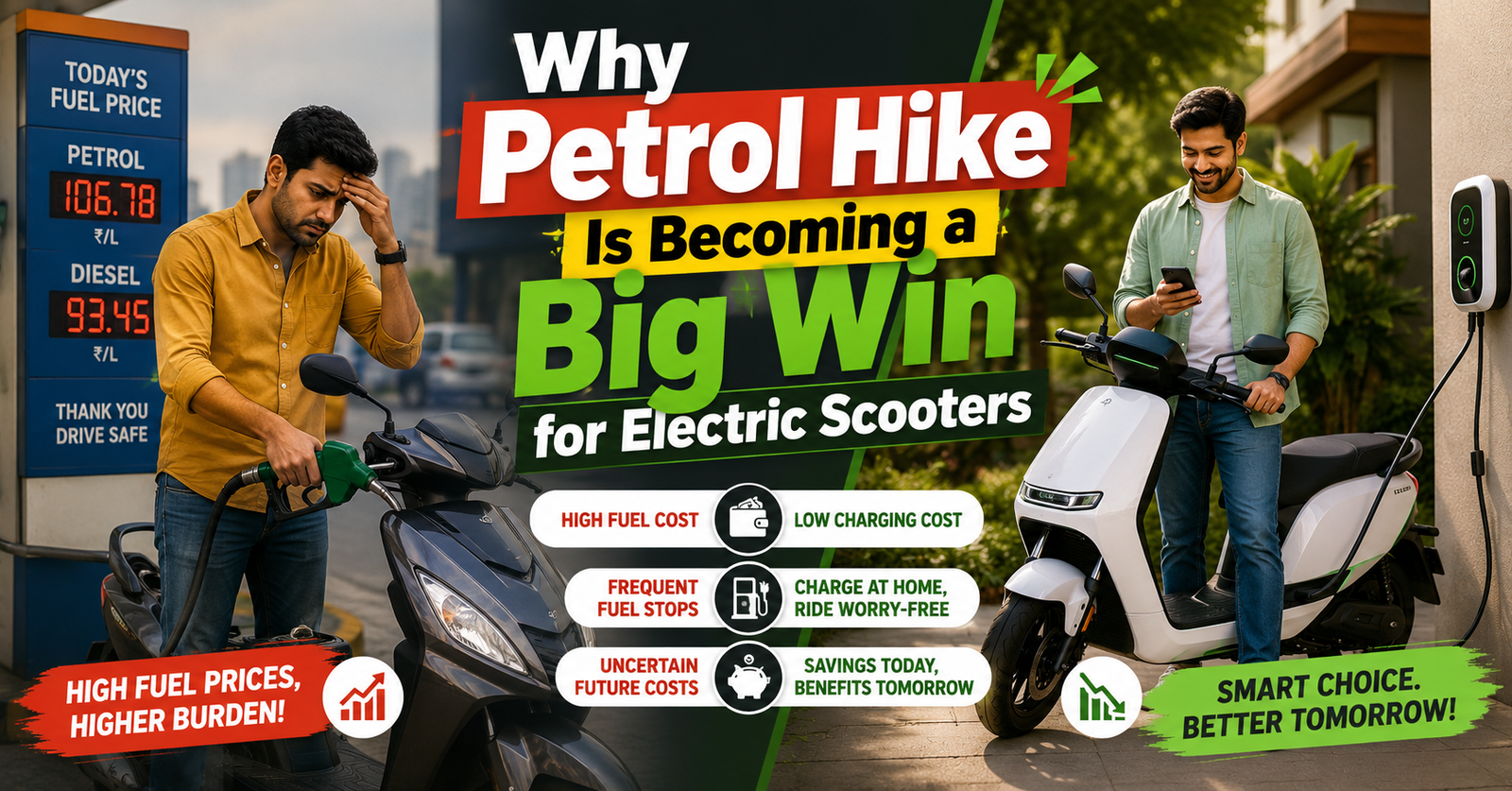
Why Petrol Hike Is Becoming a Big Win for Electric Scooters
For years, electric scooters in India were seen as a “future trend.” People liked the idea, but many still preferred traditional petrol scooters because they felt familiar, easier to trust, and more practical for daily use.
But the recent petrol hike is changing that mindset much faster than expected.
When fuel prices rise once or twice, most people adjust and move on. But when petrol keeps becoming expensive every few months, people start doing something different — they rethink their daily spending habits. That’s exactly what is happening right now across many Indian cities.
For office workers, college students, delivery riders, and even small business owners, commuting has become noticeably more expensive. A short daily ride that once felt affordable is now quietly eating into monthly budgets. And this is where electric scooters are beginning to look less like a luxury experiment and more like a practical solution.
The Real Reason People Are Looking at EV Scooters
The biggest reason is simple: running cost.
Most people don’t calculate how much they actually spend on petrol every month until prices jump suddenly. A person riding 25–30 km daily on a petrol scooter can easily spend ₹3,000–₹5,000 every month on fuel alone, depending on the city and usage.
Now compare that with an electric scooter.
Charging an EV scooter at home costs significantly less. Even after considering electricity bills, many users say their monthly commuting cost drops sharply. For someone already managing rent, groceries, school fees, or EMIs, that difference matters.
This shift becomes even more visible among delivery workers and gig economy riders.
A food delivery rider using a petrol scooter all day feels the impact of every fuel increase immediately. Higher petrol prices reduce daily savings. That’s one reason many delivery workers in metro cities are now exploring electric scooters despite concerns about charging or battery life.
Petrol Hike Is Changing Buying Decisions
Earlier, people buying scooters mostly asked questions like:
- “Kitna mileage deti hai?”
- “Maintenance kaisa hai?”
- “Resale value achhi hai?”
Now another question is becoming more common:
“Monthly fuel expense kitna bachega?”
That’s a major behavioral shift.
The conversation is slowly moving from “Should I buy an electric scooter?” to “Can I still afford daily petrol commuting long-term?”
This doesn’t mean petrol scooters will disappear anytime soon. India still depends heavily on petrol vehicles, especially in smaller towns where charging infrastructure is limited. But rising fuel prices are making people more open to alternatives than before.
And once consumers start comparing long-term expenses instead of only upfront cost, electric scooters begin to look much more attractive.
A Simple Example From Daily Life
Imagine a college student in Noida or Bengaluru who travels around 20 km daily for classes, coaching, and part-time work.
A petrol scooter may cost thousands monthly in fuel expenses over time. Parents who once ignored those costs now notice them more because everything else is also becoming expensive — groceries, transport, food delivery, even school transportation.
In that situation, an electric scooter starts feeling less like a tech product and more like a budget-saving tool.
This is one reason EV showrooms have seen growing curiosity after every major petrol hike announcement. Even people who were previously skeptical are now asking for test rides or checking EMI options.
The Emotional Side Nobody Talks About
One interesting thing about the petrol hike discussion is that it’s not only about money.
People are tired of uncertainty.
Fuel prices affect daily planning in ways most people don’t consciously realize. When petrol becomes expensive, even small decisions change:
- unnecessary trips reduce
- weekend rides become limited
- people combine errands to save fuel
- public transport usage increases
Over time, this creates frustration.
Electric scooters offer something psychologically comforting: predictability. Users know approximately how much charging will cost every month. That stability matters, especially for middle-class households already dealing with rising living expenses.
Why This Matters Beyond Individual Users
The impact goes beyond personal savings.
If electric scooter adoption grows because of petrol hike pressure, several industries will change alongside it:
- charging infrastructure
- battery swapping services
- local EV repair shops
- used EV market
- apartment charging solutions
Even employers may start encouraging EV usage for delivery staff or office commuting if fuel costs continue increasing.
In some cities, small businesses are already experimenting with electric delivery fleets because operational costs are easier to control.
That’s an important shift because it shows EV adoption is slowly moving from “environment conversation” to “economic conversation.”
And economic reasons usually influence mass adoption much faster.
There Are Still Problems — And People Know It
Of course, electric scooters are not perfect yet.
Many buyers still worry about:
- battery replacement cost
- charging time
- service availability
- resale value
- long-distance reliability
These concerns are real.
In smaller towns especially, people trust petrol scooters because mechanics and fuel stations are available everywhere. EV infrastructure still needs improvement in many areas.
But rising petrol prices are making people more willing to accept some inconvenience if monthly savings are significant enough.
That’s the key difference now.
Earlier, EV scooters had to convince people emotionally. Today, petrol prices are helping convince them financially.
The Bigger Change May Happen Slowly
India usually doesn’t change commuting habits overnight.
But gradual changes matter more than viral trends.
If petrol prices remain high or continue increasing over the next few years, electric scooters could become the default option for short daily commuting in many urban areas. Not because people suddenly became environmentally conscious, but because daily economics forced them to rethink transportation choices.
And honestly, that’s how most real consumer shifts happen.
Not through advertisements.
Through everyday pressure.
Final Thoughts
The recent petrol hike is doing more than increasing fuel bills. It is quietly changing how people think about mobility, savings, and daily transportation.
Electric scooters are no longer being viewed only as futuristic gadgets or eco-friendly alternatives. For many Indians, they are becoming a practical response to rising living costs.
That shift may not look dramatic today. But if fuel prices continue climbing, this could become one of the biggest changes in India’s daily commuting culture over the next few years.

My name is Ankit Yadav, and I am a passionate digital journalist and content creator. I write about technology, entertainment, sports, and current affairs with the aim of delivering unique, accurate, and engaging information to my readers.
I believe news should not only inform but also provide clear insights and fresh perspectives. That’s why I focus on making my articles easy to read, reliable, and meaningful.
📌 I specialize in Tech Trends, Latest News, Cybersecurity, Digital Media, Sports, and Entertainment.
📌 My mission is to share fast, authentic, and valuable updates with every article I publish.