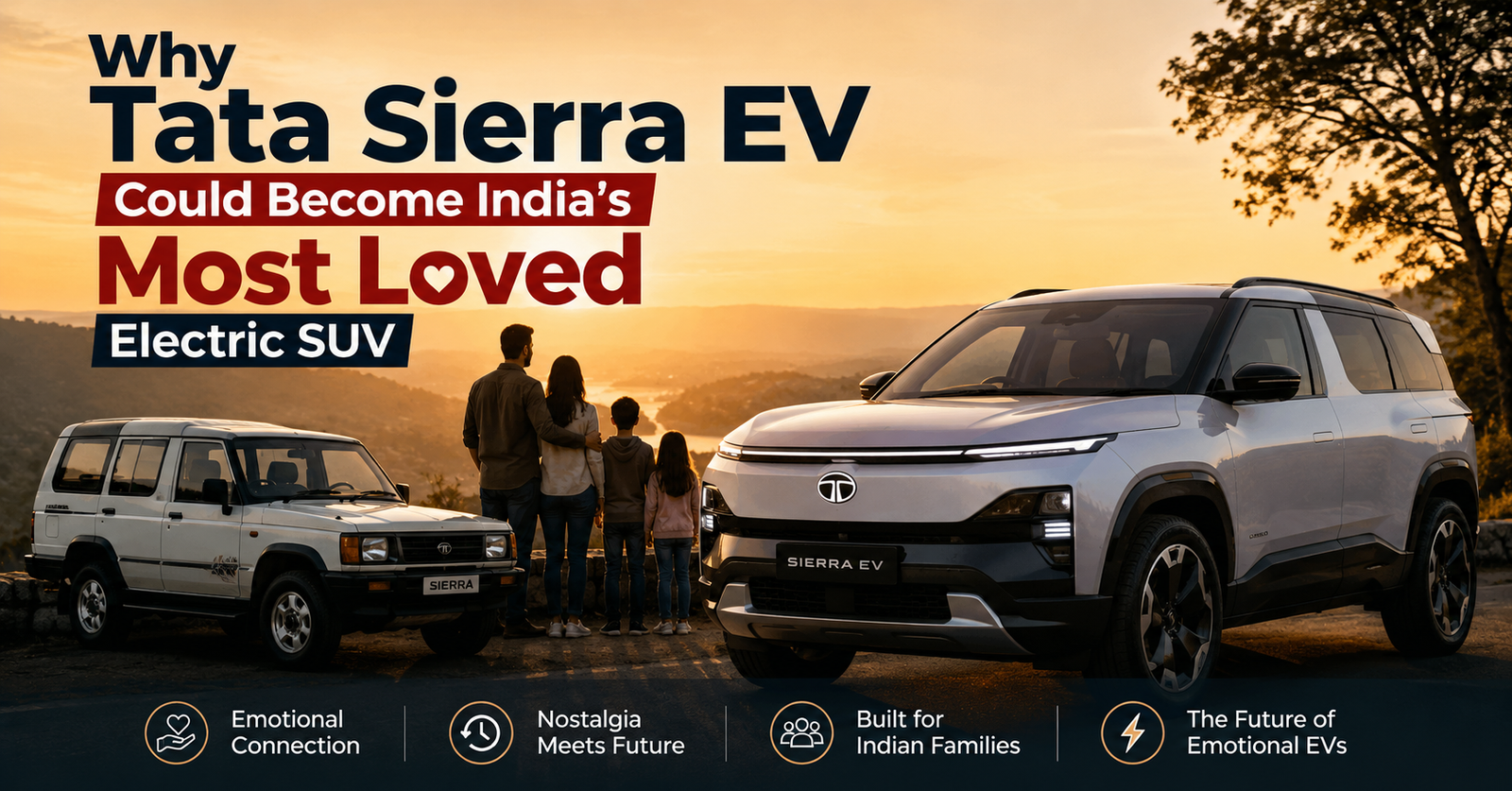
Why Tata Sierra EV Could Become India’s Most Loved Electric SUV
Electric vehicles are usually sold with numbers.
Range. Battery size. Charging speed. Touchscreens. ADAS features.
That’s how most EV conversations work today, especially in India where the market is becoming more competitive every month. But the Tata Sierra EV feels different already — and interestingly, not because of its specifications.
People are reacting to it emotionally.
That’s rare in the EV world.
Most upcoming electric SUVs are trying to look futuristic. Sharp lighting, aggressive styling, oversized displays, minimal interiors — almost every brand is following the same formula. The Tata Sierra EV, however, is bringing something that many modern cars quietly lost: familiarity.
And that might become its biggest advantage.
Why the Sierra Name Still Matters
For people who grew up in the 1990s or early 2000s, the original Tata Sierra was not just another SUV. It had a distinct identity. The large rear glass windows, tall stance, and unique shape made it stand out on Indian roads where most vehicles looked practical rather than aspirational.
Back then, owning a Sierra felt premium and slightly adventurous at the same time.
Even people who never owned one still remember seeing it.
That memory matters more than companies often realize.
Today, most EV launches feel transactional. Buyers compare prices, features, and charging times. But nostalgia creates a different kind of interest. It creates attachment before the product even arrives.
That’s exactly what is happening with the Tata Sierra EV.
Tata Motors Is Selling a Feeling, Not Just an EV
There’s an important difference between a product people “need” and a product people “feel connected to.”
The Tata Sierra EV seems positioned in the second category.
Look at how Tata has approached its design. Instead of completely redesigning the vehicle into a generic futuristic SUV, the company intentionally kept visual references from the original Sierra. The signature side glass area instantly reminds people of the older model.
That design choice is strategic.
Tata Motors understands that EV technology will eventually become common across brands. Battery range gaps will shrink. Features will become standardized. Screens and software can be copied quickly.
But emotional identity is difficult to copy.
A buyer may forget the exact battery capacity of a car after six months. But they remember how the vehicle made them feel the first time they saw it.
Indian Buyers Are Changing Too
The timing of the Tata Sierra EV is also interesting because Indian car buyers are evolving.
Earlier, SUVs in India were mostly purchased for practicality or status. Today, many buyers want vehicles that reflect personality and lifestyle. This is especially true in the ₹20–30 lakh segment where customers are becoming more emotionally selective.
People no longer buy only for mileage or resale value.
They want:
- Design with character
- A sense of identity
- Storytelling around the product
- Something that feels different from the crowd
This shift is visible everywhere. Retro-inspired motorcycles are growing. Vintage-style products are becoming popular again. Even smartphone brands use nostalgia-based marketing.
The Tata Sierra EV fits directly into this trend.
Why This Matters Beyond Nostalgia
It would be easy to dismiss the Sierra comeback as pure nostalgia marketing. But the bigger story is what it says about the future of EVs in India.
Until now, the EV race has mostly focused on technology. But once the market matures, emotional branding will become equally important.
That’s where Tata may have an advantage.
The company already understands Indian buyers better than many global brands entering the EV market. It knows that Indian families often form emotional connections with vehicles. Cars become part of road trips, family photos, wedding memories, and everyday routines.
An EV that feels cold or overly futuristic may impress initially, but it doesn’t always create attachment.
The Sierra EV has the potential to bridge old memories with new technology.
That combination is powerful.
A Real-World Example of Why This Approach Works
Imagine two buyers walking into a showroom in 2026.
One electric SUV offers slightly better acceleration and a larger touchscreen. The other is the Tata Sierra EV.
The second buyer’s father once talked about the original Sierra. Maybe there’s an old photograph somewhere from the late 90s with the vehicle parked during a family trip. Maybe the buyer remembers seeing it during childhood and thinking it looked unlike anything else on the road.
That emotional memory quietly affects the buying decision.
This happens more often than companies openly admit.
People like to believe purchases are logical, but emotional familiarity strongly influences major decisions — especially with cars.
The Risk Tata Motors Is Taking
Of course, nostalgia alone is not enough.
If the final Tata Sierra EV disappoints in quality, pricing, or driving experience, emotional excitement can disappear quickly. Expectations are already high because the Sierra name carries emotional weight.
Brands that prioritise software, technology, and futuristic design language also pose a serious threat to Tata Motors.
So the challenge is balance.
The Sierra EV cannot feel outdated in the name of nostalgia. It still needs modern performance, practical range, strong interiors, and reliable technology. Buyers may come for the emotional connection, but they will stay only if the product itself feels complete.
That balance will decide whether the Sierra becomes iconic again or simply remains an interesting comeback story.
The Bigger Shift Happening in India’s EV Market
What makes the Tata Sierra EV genuinely interesting is that it represents a broader shift.
India’s EV market is slowly moving beyond “Should I buy an EV?” toward “Which EV actually feels right for me?”
That’s a much more mature stage of the market.
And in that stage, emotional connection becomes important.
People are not just comparing specifications anymore. They are comparing identity, ownership experience, and brand personality.
The Tata Sierra EV may become one of the first Indian EVs where emotional value becomes as important as technical value.
If that happens, other manufacturers will eventually follow the same strategy.
And years later, we may look back at the Sierra EV not simply as another electric SUV launch — but as the moment Indian EVs started feeling personal.

My name is Ankit Yadav, and I am a passionate digital journalist and content creator. I write about technology, entertainment, sports, and current affairs with the aim of delivering unique, accurate, and engaging information to my readers.
I believe news should not only inform but also provide clear insights and fresh perspectives. That’s why I focus on making my articles easy to read, reliable, and meaningful.
📌 I specialize in Tech Trends, Latest News, Cybersecurity, Digital Media, Sports, and Entertainment.
📌 My mission is to share fast, authentic, and valuable updates with every article I publish.