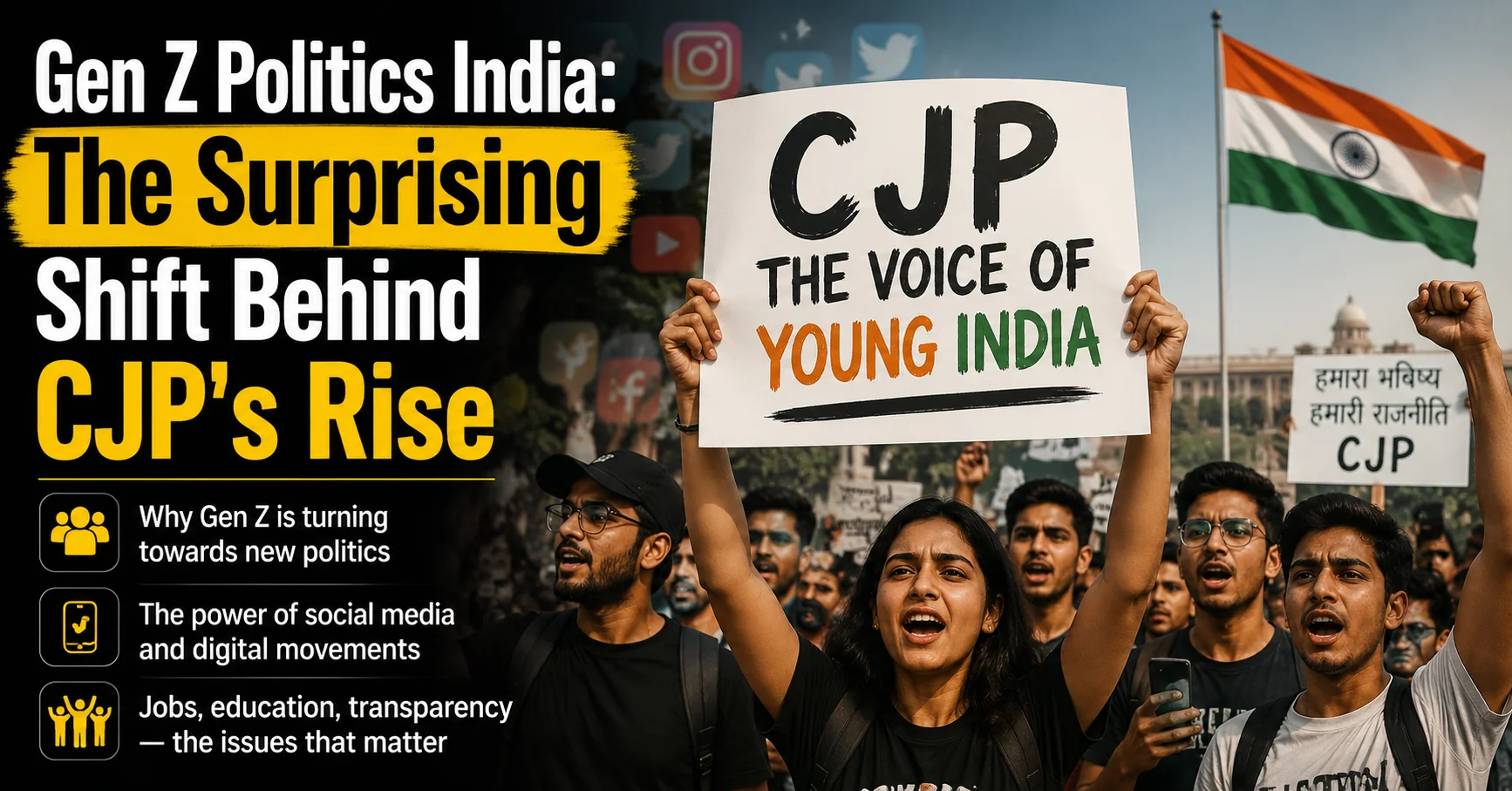
Gen Z Politics India: The Surprising Shift Behind CJP’s Rise
For decades, Indian politics has largely revolved around established political parties, familiar campaign styles, and traditional election strategies. Yet in recent years, something different has started to emerge. A growing number of young people are paying attention to newer political movements, online campaigns, and digital communities that speak directly to their concerns.
This shift has sparked an important conversation about Gen Z Politics India and what it means for the country’s democratic future. While not every young voter supports the same movement or political ideology, many share a common expectation: they want politics to feel more accessible, transparent, and relevant to everyday life.
Why Gen Z Thinks Differently About Politics
Generation Z has grown up with smartphones, social media, and instant access to information. Unlike previous generations that relied mainly on television or newspapers, today’s young adults often discover political discussions through Instagram, YouTube, X, podcasts, and online communities.
This doesn’t necessarily make them more political. Instead, it changes how they engage with politics.
Many young people prefer conversations over speeches, explanations over slogans, and direct interaction over carefully scripted campaigns. They are more likely to question information, compare multiple viewpoints, and participate in discussions before forming an opinion. (Gen Z Politics India)
As a result, political movements that communicate in a relatable and transparent way often receive more attention from younger audiences.
The Issues That Matter Most
One noticeable trend is that many Gen Z voters prioritize practical issues over traditional political narratives.
Some of the most common concerns include:
- Employment opportunities
- Quality of education
- Competitive examinations
- Mental health
- Cost of living
- Digital rights
- Environmental challenges
When political conversations focus on these everyday concerns, young audiences tend to engage more actively because the topics directly affect their future. (Gen Z Politics India)
For many students and first-time job seekers, politics is no longer just about elections. It is increasingly about policies that influence their education, careers, and financial stability.
The Influence of Social Media
One of the biggest reasons behind the rise of Gen Z Politics India is the role of social media.
Political messages no longer depend entirely on television debates or newspaper headlines. A short video explaining an issue can reach millions of people within hours.
This has changed both political communication and public expectations.
Young audiences appreciate content that is easy to understand, fact-based, and visually engaging. At the same time, they are also exposed to misinformation, making media literacy more important than ever.
Social media has become a space where political discussions happen daily—not only during election campaigns. (Gen Z Politics India)
Information Travels Faster Than Ever
A single post, video, or live discussion can quickly become the center of national conversation. Young users often discover new perspectives through creators, journalists, educators, and fellow citizens rather than through official political channels alone.
This broader range of voices influences how opinions are formed.
Why Traditional Politics Sometimes Feels Less Appealing
This does not mean that young voters have completely rejected traditional political parties. Many continue to support established organizations.
However, some feel that conventional politics can appear distant, overly formal, or slow to respond to emerging concerns.
In contrast, newer political movements often communicate using everyday language, interact directly with supporters online, and respond quickly to trending issues. (Gen Z Politics India)
Whether these approaches lead to long-term political success remains uncertain, but they clearly resonate with sections of younger audiences.

A Real-World Example
Imagine a 21-year-old college student preparing for competitive examinations.
Instead of watching nightly television debates, the student spends time on YouTube, Instagram, and online discussion forums.
Within minutes, they can watch different creators explain government policies, compare multiple viewpoints, and even participate in live discussions.
This experience feels more interactive than simply listening to political speeches.
Regardless of which political movement they eventually support, their decision-making process is shaped by digital engagement rather than traditional campaign methods.
This example reflects how technology has changed political participation for many young Indians.
Why This Shift Matters
The growing conversation around Gen Z Politics India extends beyond election results.
Political parties, policymakers, educators, and researchers are all paying closer attention because today’s young voters will shape tomorrow’s leadership.
Their expectations are influencing how campaigns are designed, how public communication happens, and how political accountability is discussed.
Young citizens increasingly expect politicians to explain policies clearly, answer difficult questions, and remain accessible through digital platforms.
These expectations are gradually changing the broader political landscape.
One Important Observation
Perhaps the most interesting change is not that Gen Z supports one specific political movement over another.
Instead, many young people appear less interested in political labels and more interested in practical outcomes.
They often ask questions like:
- Will this improve education?
- Will this create better jobs?
- Will this solve real problems?
- Can leaders communicate honestly?
These questions suggest a shift from personality-driven politics toward issue-driven conversations.
While this trend is still evolving, it represents an important change in how political participation is taking shape. (Gen Z Politics India)
Looking Ahead
It is still too early to predict exactly how Gen Z Politics India will influence future elections. Political preferences change over time, and younger voters represent a diverse group with different backgrounds, priorities, and beliefs.
However, one thing is becoming increasingly clear.
Future political success may depend not only on traditional campaigning but also on the ability to build trust, communicate transparently, and engage citizens where they already spend much of their time—online.
For political parties, this means adapting to changing expectations.
For young citizens, it means having more opportunities to participate, question, and contribute to public conversations.
Whether this leads to lasting political transformation will depend on how effectively both leaders and voters continue this evolving dialogue.

My name is Ankit Yadav, and I am a passionate digital journalist and content creator. I write about technology, entertainment, sports, and current affairs with the aim of delivering unique, accurate, and engaging information to my readers.
I believe news should not only inform but also provide clear insights and fresh perspectives. That’s why I focus on making my articles easy to read, reliable, and meaningful.
📌 I specialize in Tech Trends, Latest News, Cybersecurity, Digital Media, Sports, and Entertainment.
📌 My mission is to share fast, authentic, and valuable updates with every article I publish.