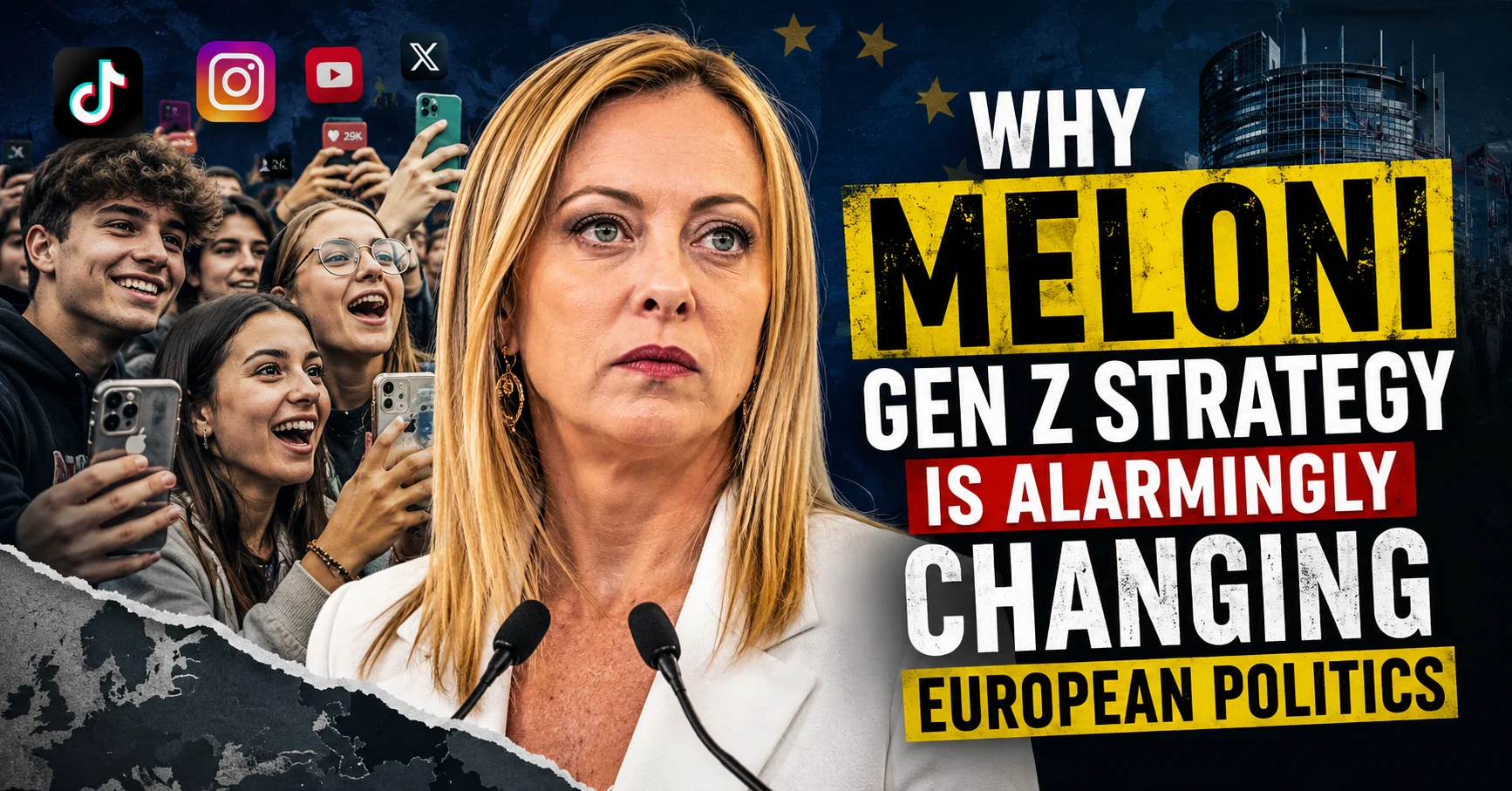
Why Meloni Gen Z Strategy Is Alarmingly Changing European Politics
Politics in Europe used to feel predictable online. Older politicians gave formal speeches, appeared on television, and relied heavily on traditional media. Most young people simply ignored them.
That dynamic is starting to change, and Giorgia Meloni is one of the clearest examples.
Over the last few years, Italy’s prime minister has quietly built a political image that feels very different from the old-school European conservative leader. Whether people agree with her politics or strongly oppose them, there’s no denying that she understands something many politicians still struggle with: younger audiences do not consume politics the same way previous generations did.
The interesting part is that Meloni did not become popular among younger internet users by suddenly changing her ideology. Instead, she changed the packaging. (Meloni Gen Z)
And that shift says a lot about where modern politics is heading.
The Internet Changed Political Communication
Gen Z voters grew up online. They are used to short videos, memes, podcasts, reaction clips, livestreams, and personalities that feel accessible rather than distant.
Traditional political messaging often feels robotic to them. Carefully scripted speeches and formal interviews rarely spread organically on TikTok or Instagram. But humor, personality, conflict, and authenticity do. (Meloni Gen Z)
Meloni’s online presence taps directly into this environment.
One small example was the viral “Melodi” meme culture connected to Indian Prime Minister Narendra Modi. What started as internet humor unexpectedly helped create a softer, more recognizable public image for Meloni outside Europe. Younger users who normally would not follow Italian politics suddenly knew who she was. (Meloni Gen Z)
That matters more than many political analysts realize.
For Gen Z audiences, visibility often comes before ideology. A politician who appears relatable online automatically becomes more culturally relevant.
From Aggressive Nationalism to Lifestyle Branding
Older far-right political movements in Europe often relied on fear-heavy messaging. Immigration panic, anti-EU rhetoric, and angry nationalism dominated the public image.
Meloni still supports nationalist policies, but her presentation style is noticeably more polished and emotionally controlled. (Meloni Gen Z)
She appears in podcasts. She engages with social media trends. Her communication team understands visual branding. Online clips are edited like creator content rather than government announcements.
This creates a very different perception among younger users.
For some Gen Z viewers, Meloni does not look like a traditional far-right politician. She looks modern, media-trained, and internet-aware.
That difference is important because image increasingly shapes political trust online.
Why This Strategy Works on Younger Audiences
Many younger voters across Europe are frustrated with mainstream politics. Rising living costs, unstable job markets, housing pressure, and distrust toward institutions have created political fatigue.
When politicians speak in highly formal language, younger audiences often disconnect immediately.
Meloni’s communication style avoids that problem. Even when discussing serious issues, her delivery feels more direct and emotionally understandable. (Meloni Gen Z)
There is also another reason her strategy works: online audiences reward confidence.
On platforms like TikTok or X, hesitation usually performs badly. Strong opinions, certainty, and emotionally clear messaging spread faster. Meloni understands this media environment very well.
That does not automatically mean Gen Z fully supports her policies. But it does explain why clips featuring her often travel further online than speeches from many traditional European leaders.
The Podcast Effect
One of the most interesting changes in modern politics is the growing importance of long-form conversations.
Podcasts have become a major influence on younger audiences because they feel less scripted than television interviews. Politicians appear more human when speaking casually for an hour rather than delivering prepared statements for two minutes. (Meloni Gen Z)
Meloni’s appearances in more relaxed media formats have helped soften her image.
A viewer may disagree with her politics but still feel that she sounds confident, composed, or authentic. In today’s internet culture, those personality impressions often matter more than detailed policy debates.
This is happening globally, not just in Italy.
Politicians are slowly realizing that creator-style communication can build stronger loyalty than traditional news coverage.
The Risk Behind “Relatable Politics”
There is also a serious concern attached to this trend.
When political messaging becomes highly aesthetic and personality-driven, difficult ideological questions can become less visible. Younger audiences may engage with political figures through memes, edits, or viral clips without fully understanding the policies behind them.
This does not only apply to Meloni. It is becoming common across global politics.
A politician with strong branding can appear moderate online even while supporting highly controversial positions offline.
That creates a strange internet dynamic where political identity sometimes behaves more like fandom culture than civic discussion.
Supporters share clips the same way fans promote influencers or celebrities. Critics respond emotionally. Algorithms amplify conflict. Serious policy conversations become secondary.
In many ways, Gen Z is experiencing politics through the logic of social media platforms rather than traditional democratic debate.
Why Other Politicians Are Watching Closely
Meloni’s digital success is being noticed far beyond Italy.
Conservative leaders across Europe are increasingly studying how online branding affects younger voters. Some are attempting similar strategies by becoming more active on TikTok, YouTube, or podcast platforms.
The challenge is that internet culture cannot be copied mechanically.
Younger audiences quickly detect forced trends or artificial attempts to appear “cool.” Many politicians fail because they approach social media like advertising instead of communication.
Meloni’s advantage is that her online image feels consistent. Whether someone likes her or not, the personality appears intentional rather than manufactured.
That consistency builds recognition.
Politics Is Starting to Look More Like Creator Culture
One of the biggest insights from the meloni gen z phenomenon is that modern political influence increasingly overlaps with influencer culture.
Visibility matters. Personality matters. Shareability matters.
A politician no longer needs only newspaper support or television coverage to shape public perception. Viral clips, memes, creator collaborations, and podcast appearances can now influence political relevance just as strongly.
This shift is changing how younger generations encounter ideology itself.
For Gen Z, politics often arrives through entertainment formats first and policy discussions second.
That reality makes political communication more accessible, but it also makes it easier for branding to overpower substance.
And that may become one of the defining political challenges of the next decade.

My name is Ankit Yadav, and I am a passionate digital journalist and content creator. I write about technology, entertainment, sports, and current affairs with the aim of delivering unique, accurate, and engaging information to my readers.
I believe news should not only inform but also provide clear insights and fresh perspectives. That’s why I focus on making my articles easy to read, reliable, and meaningful.
📌 I specialize in Tech Trends, Latest News, Cybersecurity, Digital Media, Sports, and Entertainment.
📌 My mission is to share fast, authentic, and valuable updates with every article I publish.