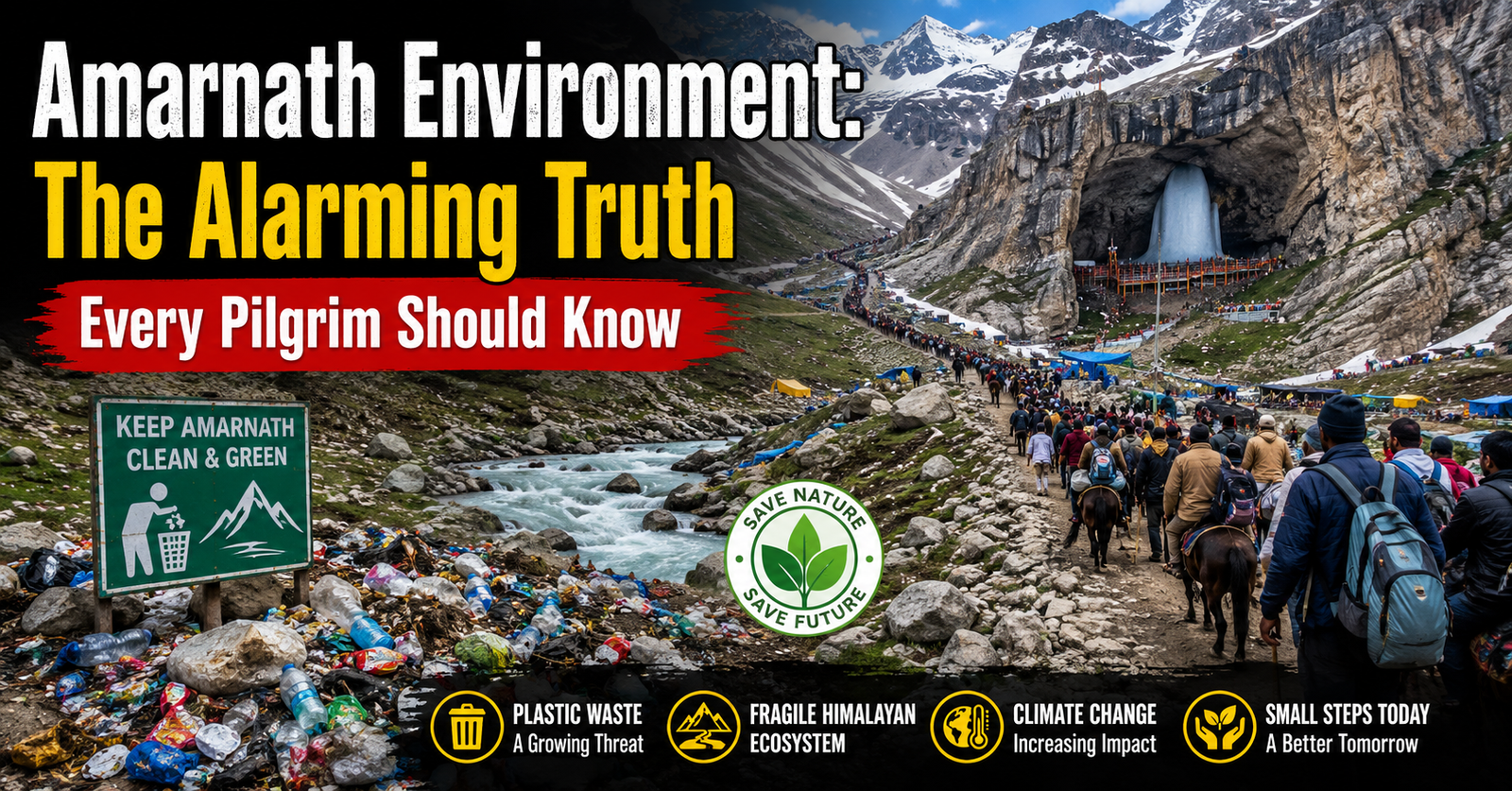
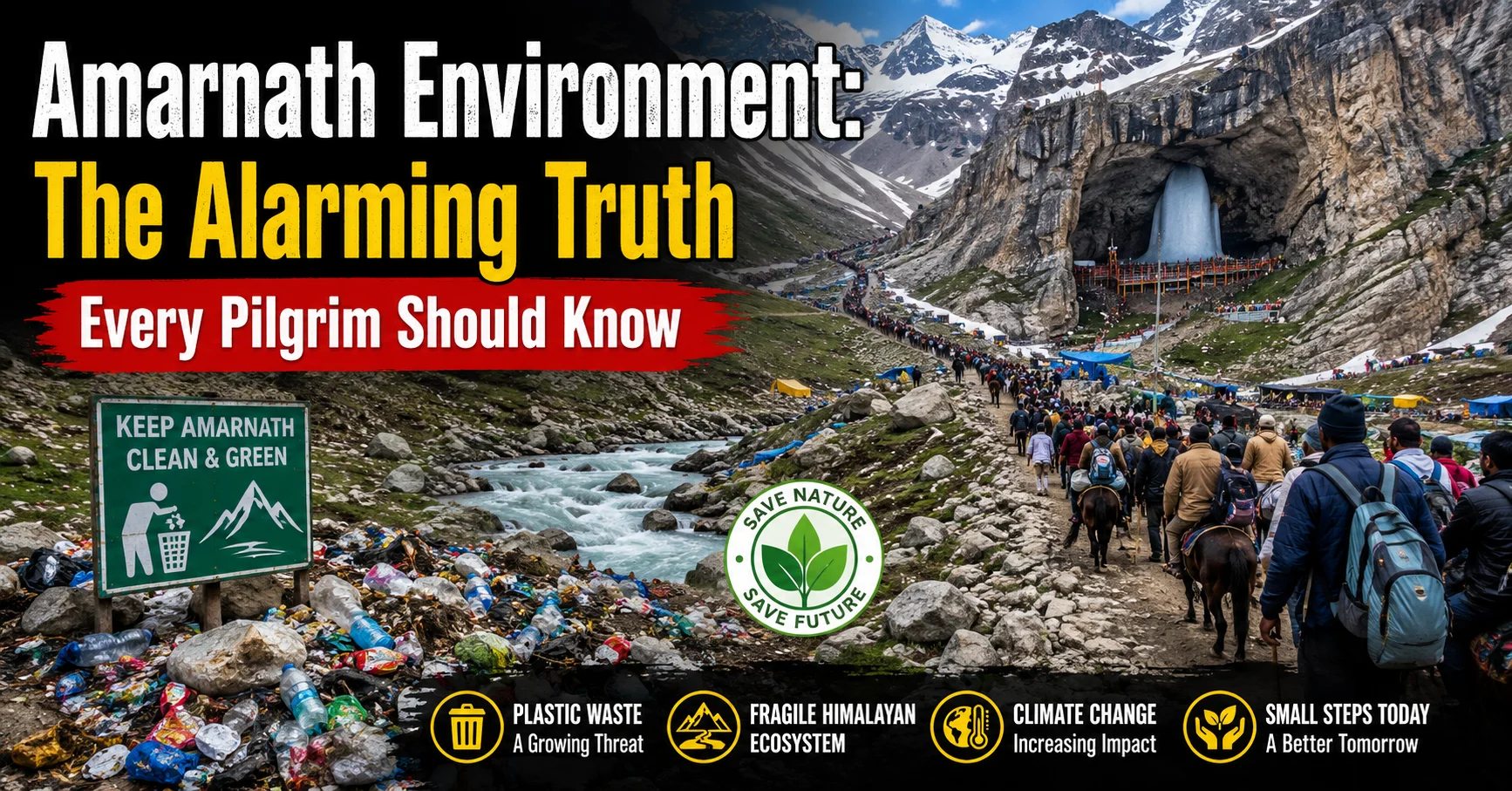
Amarnath Environment: The Alarming Truth Every Pilgrim Should Know
Every year, thousands of devotees undertake the Amarnath Yatra with deep faith and determination. The journey through snow-covered mountains, narrow valleys, and high-altitude trails is more than a pilgrimage—it is a personal spiritual experience for many people.
But as the number of visitors continues to grow, another conversation has become increasingly important: the Amarnath Environment.
The Himalayan region surrounding the holy cave is one of India’s most delicate ecosystems. While the Yatra brings religious significance and economic opportunities, it also places considerable pressure on the local environment. Understanding this balance is essential if the pilgrimage is to remain sustainable for future generations.
Why the Amarnath Environment Matters
The Amarnath cave lies at an altitude of nearly 3,900 meters, surrounded by glaciers, alpine meadows, streams, and wildlife habitats. These environments recover from human disturbance very slowly, in contrast to metropolitan tourist sites.
Even a small increase in waste, pollution, or construction can have long-lasting effects because of the harsh climate and short growing season.
For many pilgrims, the focus is naturally on reaching the shrine safely. However, every discarded plastic bottle, food wrapper, or damaged trail becomes part of a much larger environmental challenge.
Protecting this region is not only about conserving nature—it is also about preserving the sacred experience that attracts millions of devotees. (Amarnath Environment)
How the Yatra Affects the Local Ecosystem
Growing Waste Along the Route
One of the biggest environmental concerns is waste generation.
Thousands of pilgrims travel through temporary camps where food, drinking water, medical supplies, and packaged goods are consumed daily. Despite regular cleaning efforts, collecting and transporting waste from remote mountain locations remains difficult.
Plastic packaging is particularly problematic because it does not decompose easily in cold Himalayan conditions.
Pressure on Water Resources
Mountain streams provide drinking water for camps and nearby communities. During the pilgrimage season, water demand rises sharply.
Improper disposal of waste or untreated wastewater can affect water quality, creating challenges for both pilgrims and local ecosystems. (Amarnath Environment)
Impact on Wildlife
The Amarnath route passes through habitats used by several Himalayan animal and bird species.
Large crowds, continuous movement, vehicle traffic, and noise can temporarily disturb wildlife during the pilgrimage season. While many animals avoid human activity, repeated disturbances may gradually alter their natural behavior.
Fragile Alpine Vegetation
Although the route’s lovely grasslands and alpine meadows appear hardy, many Himalayan flora take years to recover from injury.
People walking outside designated trails, setting up temporary camps, or increased foot traffic can gradually reduce vegetation cover and contribute to soil erosion. (Amarnath Environment)
Climate Change Adds Another Challenge
Environmental concerns around the Amarnath Yatra cannot be viewed separately from climate change.
Scientists have observed changing snowfall patterns, warmer temperatures, and shifting glacier conditions across many Himalayan regions over the past few decades.
These broader climatic changes make fragile mountain ecosystems even more vulnerable. Increased human activity during the pilgrimage season may add pressure to an environment that is already adapting to changing weather conditions.
Rather than blaming a single factor, it is more useful to understand that both natural climate trends and human activities influence the landscape together. (Amarnath Environment)
A Real-World Example
Imagine two trekking groups following the same mountain trail.
The first group carries reusable water bottles, follows marked paths, separates waste, and leaves the campsite exactly as they found it.
The second group leaves plastic bottles behind, walks across fragile vegetation to take shortcuts, and disposes of food waste near streams.
Both groups complete the journey, but their environmental footprint is very different.
Now multiply that difference across thousands of visitors during the Yatra season. Small individual choices become significant when repeated on such a large scale. (Amarnath Environment)
The Positive Side Often Goes Unnoticed
Discussions about the Amarnath Environment sometimes focus only on environmental damage, but there is another side worth acknowledging.
The pilgrimage supports thousands of local livelihoods. Pony operators, porters, shopkeepers, hotel owners, transport providers, and seasonal workers depend heavily on the Yatra for income.
This creates an important balance.
Protecting the environment should not mean limiting opportunities for local communities. Instead, sustainable management can help ensure that both nature and livelihoods continue to thrive together.
Practical Ways to Reduce Environmental Impact
Choose Reusable Items
Carrying a reusable water bottle and avoiding single-use plastic may seem like a small step, but collective action can significantly reduce waste generation.
Stay on Designated Trails
Marked routes are designed to minimize ecological damage while ensuring visitor safety.
Avoiding shortcuts protects fragile vegetation and reduces soil erosion.
Dispose of Waste Responsibly
Using official waste collection points helps prevent litter from entering rivers and mountain landscapes.
Even biodegradable waste should not be left in natural areas.
Respect the Local Ecosystem
Avoid disturbing wildlife or picking alpine flowers.
These simple actions help preserve the natural beauty that makes the pilgrimage unique.
Support Eco-Friendly Services
Choosing responsible accommodation, transport providers, or local vendors that follow environmentally conscious practices encourages sustainable tourism throughout the region.
An Important Observation
One interesting shift is that environmental awareness among pilgrims appears to be increasing.
Many volunteer groups, local organizations, and government agencies now organize cleanliness campaigns during the Yatra. Social media has also encouraged visitors to think beyond the pilgrimage itself and consider the condition in which they leave the mountains behind. (Amarnath Environment)
This change in attitude may prove just as important as new environmental regulations.
Looking Ahead
The future of the Amarnath Environment depends on shared responsibility rather than individual blame.
Pilgrims, local communities, administrators, environmental experts, and tourism operators all play different but equally important roles.
A sacred place should inspire respect not only for faith but also for the natural surroundings that make the journey meaningful.
Protecting the Himalayan landscape today ensures that future generations can experience the same spiritual atmosphere without inheriting an ecosystem weakened by avoidable damage.
The Amarnath Yatra has always represented devotion, endurance, and hope. With thoughtful environmental practices, it can also become a model for responsible pilgrimage in one of the world’s most fragile mountain regions.

My name is Ankit Yadav, and I am a passionate digital journalist and content creator. I write about technology, entertainment, sports, and current affairs with the aim of delivering unique, accurate, and engaging information to my readers.
I believe news should not only inform but also provide clear insights and fresh perspectives. That’s why I focus on making my articles easy to read, reliable, and meaningful.
📌 I specialize in Tech Trends, Latest News, Cybersecurity, Digital Media, Sports, and Entertainment.
📌 My mission is to share fast, authentic, and valuable updates with every article I publish.