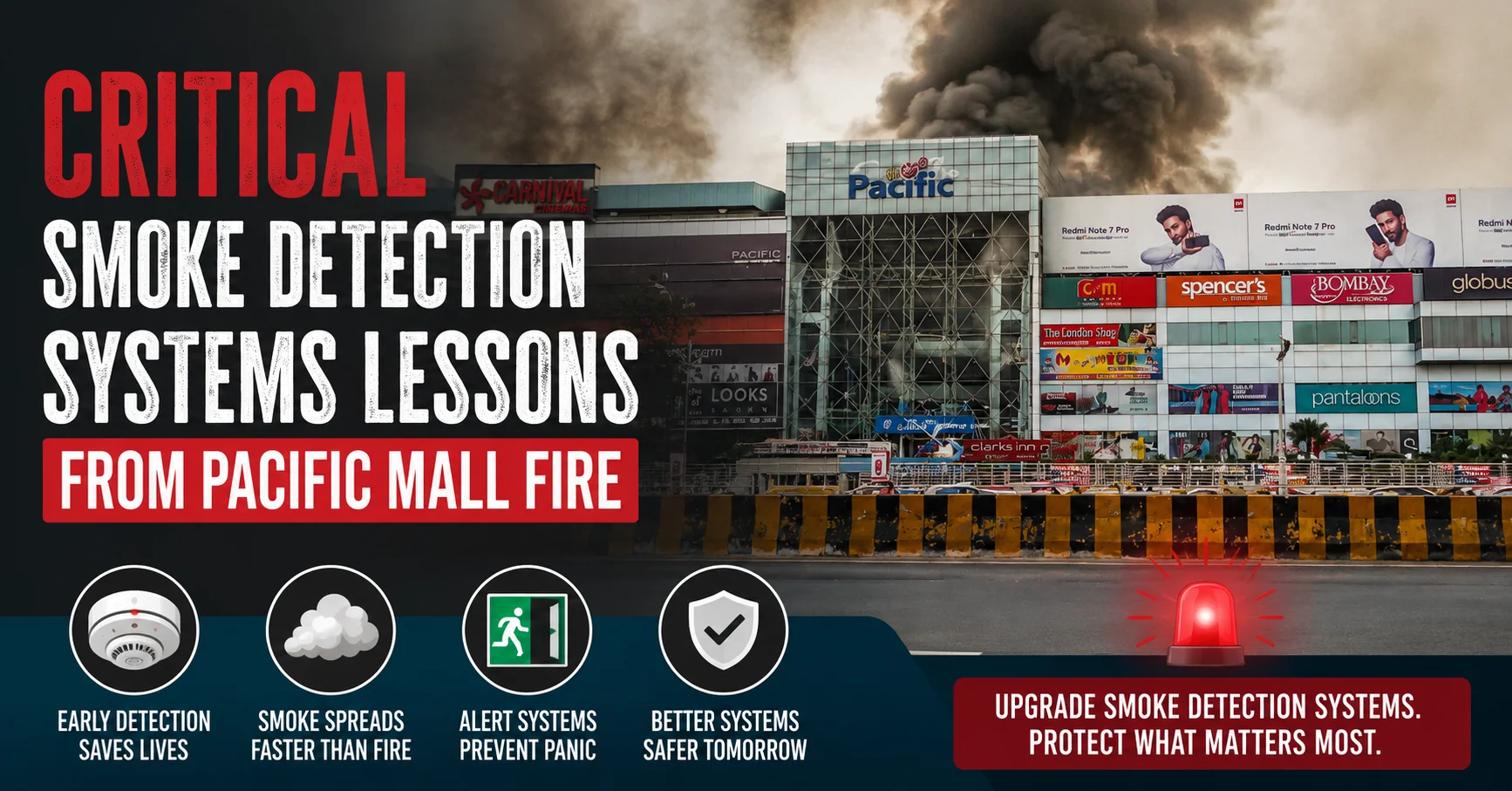
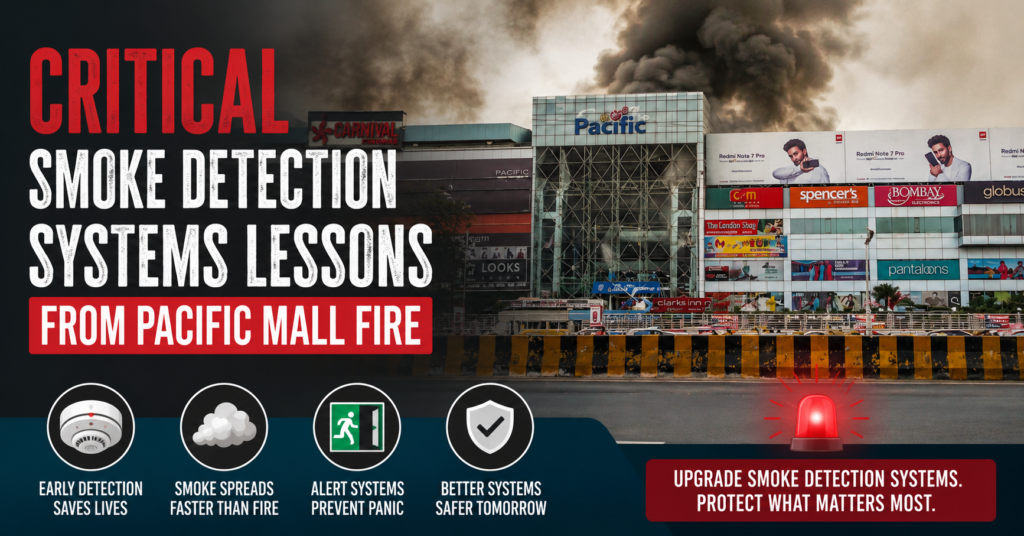
Critical Smoke Detection Systems Lessons From Pacific Mall Fire
When news of the Pacific Mall fire near Anand Vihar started spreading, most headlines focused on the flames. Fire tenders arrived quickly, the blaze was controlled within an hour, and thankfully no casualties were reported. But behind the visuals of smoke-covered corridors and cinema hall damage, there was another story that received far less attention — the danger created by smoke itself.
In many commercial fires, flames are not the biggest threat during the first few minutes. Smoke is.
That may sound surprising because people naturally fear visible fire more than grey clouds filling a hallway. But in enclosed places like malls, multiplexes, and parking areas, smoke can travel much faster than people can react. It reduces visibility, creates confusion, and in many cases causes breathing problems long before the fire reaches nearby areas. (Smoke Detection Systems)
The Pacific Mall incident is a reminder that fire safety is no longer just about extinguishers and emergency exits. Modern buildings also depend heavily on reliable smoke detection systems to detect danger early and guide people before panic begins.
Why Smoke Becomes Dangerous So Quickly
One reason smoke is underestimated is because people associate danger only with flames. In reality, smoke from electrical fires often contains toxic gases and microscopic particles that spread through air-conditioning ducts, ceilings, and narrow corridors.
Imagine sitting inside a dark cinema hall during a morning movie screening. Suddenly, there is a burning smell near the projector room. Within minutes, smoke starts entering the hall. Even if the actual fire is small, visibility drops almost immediately. People begin standing up, checking exits, and trying to move at once. (Smoke Detection Systems)
This is where crowd psychology changes everything.
Most injuries during indoor fire incidents happen because people lose direction, inhale smoke, or get trapped in congested exits. In many situations, smoke reaches people faster than the flames themselves.
That is exactly why commercial buildings invest in layered safety systems instead of relying only on firefighting teams.
The Real Job of Smoke Detection Systems
People often think smoke alarms only make loud sounds after a fire starts. But modern smoke detection systems do much more than that.
In large malls and multiplexes, these systems are connected to central safety controls. Once smoke is detected, several things can happen automatically:
Early Warning Before the Fire Spreads
Sensors identify smoke particles in the air before flames become large enough to spread. This early warning gives staff valuable time to begin evacuation procedures.
In crowded spaces, even a two-minute advantage matters. (Smoke Detection Systems)
Automatic Shutdown of Ventilation Systems
Many modern malls are heavily air-conditioned. Without proper controls, smoke can spread through ventilation systems into other sections of the building.
Advanced smoke detection systems can automatically isolate airflow to prevent smoke from circulating further.
Guiding Safe Evacuation
Emergency lights, public announcements, and smoke extraction systems often work together. The goal is not just to detect fire but to help people leave safely without panic.
This is especially important inside cinema halls where darkness and limited exits create additional confusion. (Smoke Detection Systems)
What the Pacific Mall Fire Reveals About Urban Safety
The incident also raises a larger question about commercial safety in Delhi-NCR.
Over the last few years, the region has seen multiple fire-related incidents in hospitals, coaching centers, residential buildings, and shopping complexes. Most buildings technically meet minimum safety requirements on paper. But real emergencies expose how dependent modern spaces are on maintenance and monitoring.
A smoke detector installed five years ago is not enough if it is poorly maintained today.
That is one of the least discussed problems in India’s commercial infrastructure. Safety systems exist, but regular testing is often inconsistent. Some alarms malfunction, some sensors become dusty, and some emergency pathways get blocked over time because daily operations take priority over emergency planning.
The Pacific Mall fire did not become a tragedy, but it easily could have under different circumstances.
If the fire had started during peak evening hours or during a packed movie show, evacuation could have looked very different.
Why Cinema Areas Are More Vulnerable
Cinema projector rooms are high-risk zones because they contain concentrated electrical systems, servers, wiring equipment, and cooling units operating continuously.
Heat buildup is common in such areas. If ventilation is poor or wiring systems age over time, even a small electrical issue can trigger smoke generation very quickly.
The challenge is that smoke from these areas usually enters enclosed seating spaces first. That creates a psychological effect where people react before fully understanding the situation.
Anyone who has experienced smoke indoors knows how disorienting it feels. Visibility drops. Breathing becomes uncomfortable. Decision-making slows down.
That is why evacuation planning matters just as much as firefighting equipment.
Fire Safety Is Becoming a Public Infrastructure Issue
One interesting shift happening globally is that fire safety is no longer viewed only as a building-management responsibility. It is increasingly treated as part of urban infrastructure.
People now expect malls, airports, metro stations, and office towers to respond intelligently during emergencies. That expectation includes functioning smoke detection systems, clear emergency communication, and fast evacuation support.
In many ways, people notice safety systems only when they fail.
The Pacific Mall incident became news because a visible fire occurred. But countless smaller electrical smoke incidents probably get controlled every year precisely because automated systems detect problems early.
That silent prevention rarely makes headlines.
A Simple Observation Most People Ignore
One thing worth noticing is how differently people react to visible flames versus smoke.
When flames are visible, people immediately understand danger. Smoke creates hesitation. Some people assume it is temporary. Others wait for instructions. A few continue recording videos on their phones instead of exiting quickly.
That delay can become dangerous in enclosed public spaces.
This is why modern emergency systems focus heavily on immediate alerts and directional guidance rather than waiting for visible fire escalation.
The Bigger Lesson After the Pacific Mall Fire
The Pacific Mall fire should not only be remembered as another breaking-news incident. It should be viewed as a warning about how vulnerable crowded indoor spaces can become within minutes.
The good news is that technology already exists to reduce these risks significantly. Well-maintained smoke detection systems, ventilation controls, evacuation planning, and regular safety audits can prevent small electrical incidents from turning into major disasters.
But these systems only work when building management treats safety as an active responsibility rather than a one-time compliance requirement.
Because in indoor fires, people often do not get trapped by flames first.
They get trapped by smoke.

My name is Ankit Yadav, and I am a passionate digital journalist and content creator. I write about technology, entertainment, sports, and current affairs with the aim of delivering unique, accurate, and engaging information to my readers.
I believe news should not only inform but also provide clear insights and fresh perspectives. That’s why I focus on making my articles easy to read, reliable, and meaningful.
📌 I specialize in Tech Trends, Latest News, Cybersecurity, Digital Media, Sports, and Entertainment.
📌 My mission is to share fast, authentic, and valuable updates with every article I publish.